Trying to find a genuinely inclusive dating app can feel like digging through a pile of identical swipe-machines, all of them treating gender and orientation like some minor detail the developers remembered to add at the last minute. The good apps are actually built (or at least seriously adapted) to reflect who people really are and who they're actually looking for, instead of shoving everyone into that tired "man seeking woman" box. So this piece is about what real inclusivity looks like, in the profile fields, in the safety stuff, in how matching works, and I'll use a casual platform called Flirtup as a running example of how a site can approach all this.
Doesn't matter if you're a gay guy who's sick of apps that assume the whole world is straight, or a nonbinary person who just wants a profile field that actually fits, or a couple poking around at something less conventional. The point is the same. I want to help you look at these apps with sharper eyes.
Table of Contents
- What Makes a Dating App LGBTQ+ Friendly?
- Why Inclusive Profile Options Matter in LGBTQ+ Dating Apps
- How Do LGBTQ+ Dating Apps Keep Users Safe?
- Matching Features That Support Real Connections
- Comparing Different Types of Inclusive Dating Platforms
- Where Does Flirtup Fit Into the LGBTQ+ Dating Landscape?
- Tips for Building a Great Profile on Inclusive Dating Platforms
- FAQ
What Makes a Dating App LGBTQ+ Friendly?
An LGBTQ+ friendly dating app is one that lets you describe your gender and orientation accurately, offers matching that isn't chained to some man-woman default, and treats LGBTQ+ users as people it's actually built for rather than an afterthought. Sounds simple when you say it out loud. In practice it bleeds into basically every part of a platform, from the sign-up form all the way to how it filters your results.
The good ones tend to nail a handful of concrete things: how many identity options you get when you register, whether couples and non-monogamous setups are even recognized, how the platform deals with harassment and fake profiles, and whether the matching actually surfaces people you'd want to meet instead of quietly assuming everyone's straight. And this stuff matters a lot to this crowd specifically. Pew Research Center's 2020 report on the state of online dating found that lesbian, gay, and bisexual adults are considerably more likely than straight adults to have used a dating site or app. When you're the group using these things the most, you notice fast when a platform clearly didn't think about you.
One thing I'd push back on, though: "LGBTQ+ friendly" isn't a single yes-or-no checkbox. An app can have fantastic gender options and garbage safety tools. Or great moderation and a laughably narrow idea of what a relationship looks like. You've got to weigh several things at once, not fall for one flashy feature and call it a day.
Why Inclusive Profile Options Matter in LGBTQ+ Dating Apps
Profile options matter because they decide whether you can even represent yourself honestly before you've typed a single message. An app that only gives you "man" or "woman," or that assumes attraction only runs between those two, basically hands you a choice: lie about yourself, or leave. Neither is great.
Gender and Orientation Fields
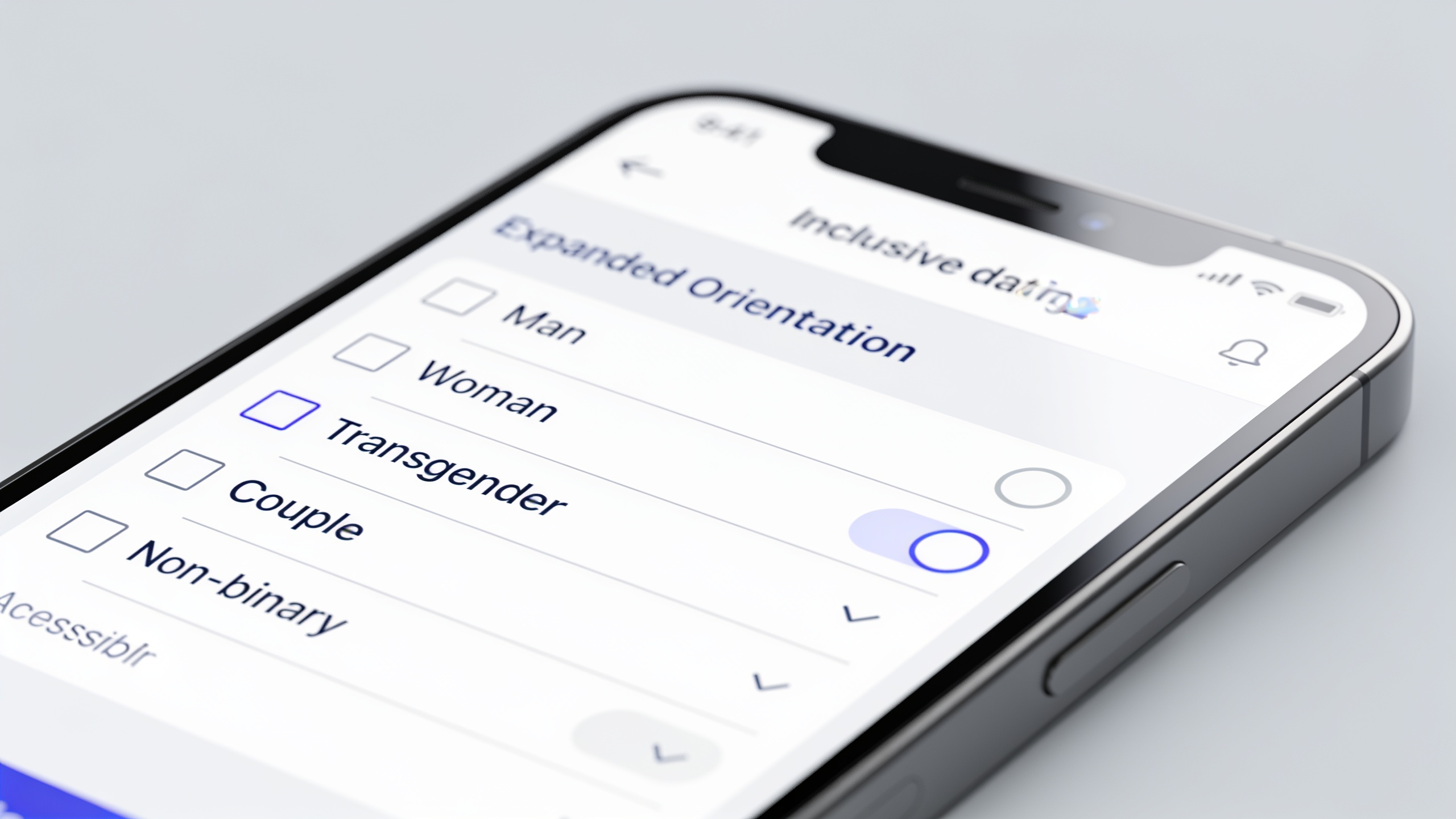
The sign-up form is the first real test. Does it make room for transgender identities, nonbinary folks, and "seeking" preferences beyond the obvious pairing? Flirtup, for instance, asks you to identify as a Man, Woman, Couple (Man + Woman), Couple (Man + Man), Couple (Woman + Woman), Transgender TS Male to Female, or Transgender TS Female to Male, and then pick who you're after from a similarly stretched-out list that even includes TV/CD (transvestite/cross-dresser) options. That tells you right away the thing was designed with more than one straight pairing in mind, which, for a casual dating site, is a decent baseline to start from.
Not every app bothers to go that far. And look, even a list like that won't cover every identity somebody might want to pick. If your specific term isn't on there, that's a real limitation, and I'd rather just say so than pretend it's flawless.
Relationship Structures Beyond the Binary
Inclusive apps also have to reckon with relationships that aren't "one person looking for one person." Couples dating together, people into non-monogamy, folks who sit outside the usual categories entirely. All of them benefit when the sign-up and search options actually reflect real life. Flirtup listing "Couple (Man + Woman)," "Couple (Man + Man)," and "Couple (Woman + Woman)" as their own identity categories is a pretty direct example of building for people beyond solo, opposite-sex matching. For couples into non-traditional dating, that's the difference between being found accurately and having to rig up some awkward workaround profile just to exist on the platform.
How Do LGBTQ+ Dating Apps Keep Users Safe?
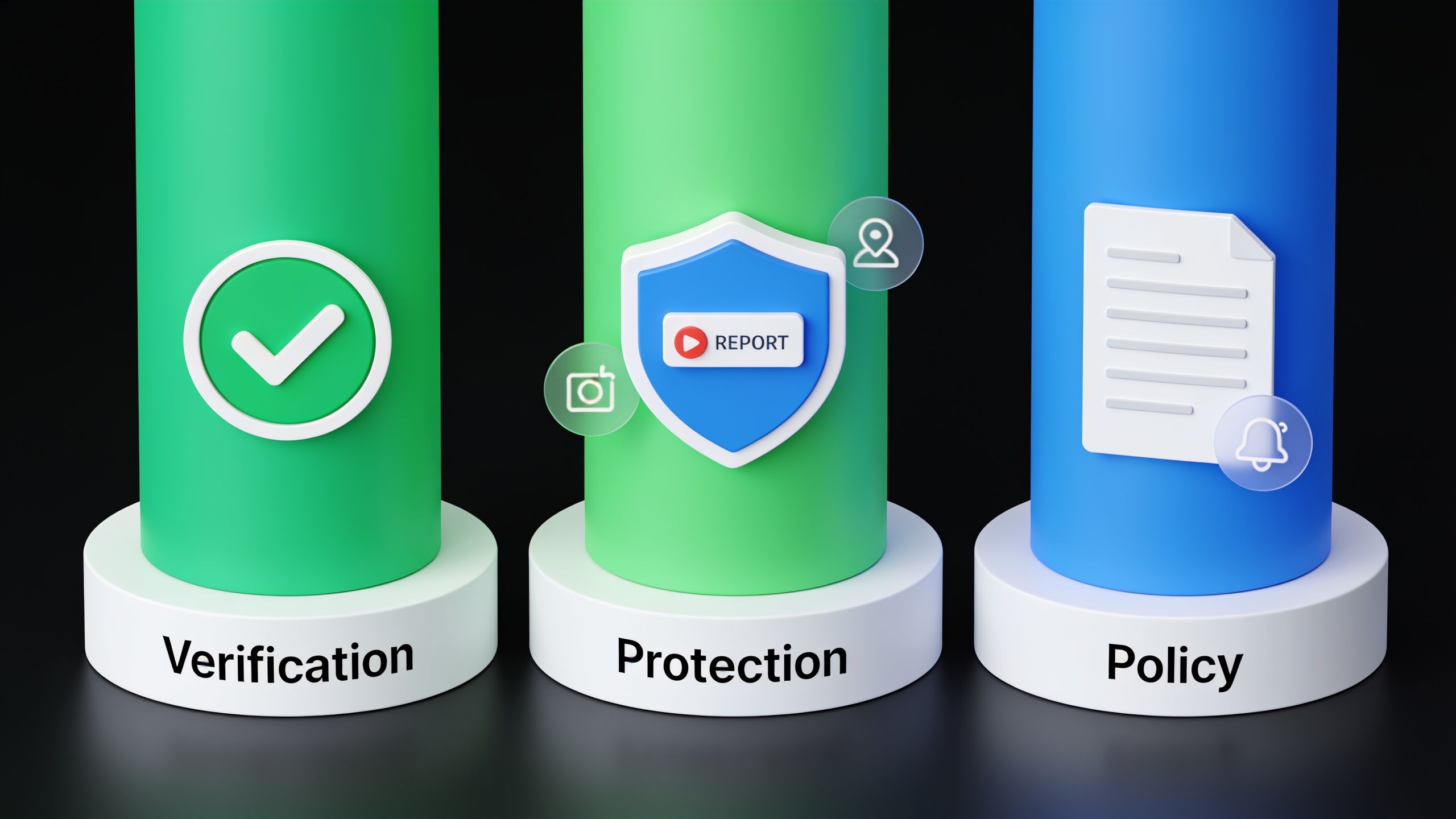
Safety on these apps usually boils down to three things: verification or moderation, decent reporting and blocking tools, and clear rules against harassment. And this matters more here than in the general dating pool, because LGBTQ+ users statistically catch more harassment online. GLAAD's Social Media Safety Index has flagged weak protections for LGBTQ+ users across mainstream platforms over and over again as an ongoing industry failure.
My honest advice? Check for this stuff yourself instead of assuming it's there. Look for a reporting button you can actually find, a terms-of-service and privacy policy you're asked to read at sign-up, and some sign of how the platform handles bad behavior. If a company's public materials say nothing about moderation, I'd treat that as an open question rather than trust that there's some invisible safety net working behind the curtain.
Age verification is another baseline worth eyeballing. Flirtup's sign-up, for example, makes you confirm you're over 18 and acknowledge the Terms and Conditions, Privacy Policy, and Cookie Policy before you get an account. That's a standard step, and it at least sets up a documented consent process at the door. Past that, though, the publicly available material doesn't spell out specific community moderation tools, so I'd file that under "not stated publicly" rather than assume any particular level of oversight is happening.
Matching Features That Support Real Connections
Good matching on LGBTQ+ apps lets you search and filter by the exact genders and relationship types you actually want, instead of jamming everyone through one generic algorithm. The reason's pretty obvious. A nonbinary user, or a couple looking for a third, shouldn't have to wade through a pile of matches that were never relevant to begin with.
Usually this shows up as those expanded "seeking" fields at sign-up (basically mirroring the identity options I mentioned earlier), location-based search so you can find people nearby, and messaging that kicks in once there's mutual interest. Flirtup pairs its expanded identity list with an equally expanded "seeking" list, so someone who signs up as a Couple (Man + Man) can search for the specific thing they're after instead of leaning on some vague general pool. Their whole pitch is "Meet, Chat, and Keep It Casual," which pretty much sums up the vibe: sign up, message, see what happens, no giant multi-step vetting gauntlet in your way.
I'll say this, though. The technical guts of the matching, like how compatibility gets calculated or whether there's any machine learning driving suggested matches, isn't laid out in Flirtup's public-facing stuff. If that kind of detail matters to you (on any app, really), go dig for it directly rather than assume it's there.
Comparing Different Types of Inclusive Dating Platforms
Not every inclusive platform plays the same game, and knowing the rough categories helps you set expectations before you sign up anywhere. Broadly, they fall into a few buckets based on what they were built for, who they're chasing, and how deep their profile options go.
| Platform Type | Typical Profile Options | Community Focus | Best Suited For |
|---|---|---|---|
| Dedicated LGBTQ+ niche apps | Often detailed gender/orientation menus built specifically for LGBTQ+ users | Community-first, identity-specific | Users who want a space built exclusively around LGBTQ+ dating |
| Mainstream dating apps with inclusive filters | Basic-to-moderate gender options added onto a broader mainstream design | General dating audience with LGBTQ+ users as one segment | Users who want a large user base and don't mind a mixed audience |
| Casual dating platforms with expanded identity fields (e.g., Flirtup) | Expanded sign-up categories including couples and transgender identities, per site's own registration flow | Casual, low-commitment connections across a range of identities and relationship types | Singles and couples seeking casual, no-pressure dating rather than long-term matchmaking |
Treat that as a general lay of the land, not some definitive ranking. Specific features, moderation, and safety tools shift from platform to platform and change over time. So if you're eyeing a particular app, go check its actual sign-up flow and current policies rather than trusting a category-level generalization to tell the whole story.
Where Does Flirtup Fit Into the LGBTQ+ Dating Landscape?
Flirtup pitches itself as a casual platform built for quick, low-pressure connections rather than long-haul matchmaking, and its sign-up clearly tries to fit a wider range of identities than a strictly binary app would. Their own description centers on meeting, chatting, and "keeping it casual," which tracks with who they're going for: single men and women after casual dating, couples into non-traditional arrangements, and LGBTQ+ folks looking for casual connections.
What jumps out is the breadth of categories right from the jump. Man, Woman, Couple (Man + Woman), Couple (Man + Man), Couple (Woman + Woman), Transgender TS Male to Female, Transgender TS Female to Male, plus a "seeking" list with TV/CD options. If you're worn down by apps that offer two genders and exactly one kind of pairing, that's a genuinely different starting line.
But I'd rather be straight with you about the gaps. There's no published info on specific safety certifications, no identity verification beyond that age-and-terms acknowledgment at sign-up, and no breakdown of how the matching actually works under the hood. Anyone thinking about it (or honestly, any dating app) should treat those as open questions and go read the site's current terms and features yourself instead of assuming some particular standard is being met.
Tips for Building a Great Profile on Inclusive Dating Platforms
The best profiles on these apps are specific, honest, and give the other person something real to bite on. Vague profiles get ignored no matter how inclusive the app's design is. A few habits genuinely move the needle.
Be precise about what you're looking for, not just who you are. If the "seeking" field lets you specify a couple, a particular gender identity, or a specific kind of casual thing, actually use it instead of defaulting to the widest possible net. It saves everybody time and lands you better matches. Trust me on that one.
Write a short bio that shows some tone, not just facts. One line about what a fun weekend looks like to you, or what you're actually hoping to get out of casual dating, says way more than a dry list of stats. Setting the scene helps too. Plenty of people mention wanting a chill, low-key first date at home, and even little details like a nicely put-together living room from a retailer such as Oak Castle Furniture can shape the vibe of a casual hangout that started through an app.
Keep your photos current and update your identity or preference fields if anything changes, because inclusive platforms only work as intended when the information behind them stays accurate. And treat those first few messages as your real chance to confirm the things that actually matter to you, whether that's relationship structure, boundaries, or just pacing. Don't assume the app's categories did all the matching for you. They didn't.
One more thing, more of a broader-industry note. The teams and communities behind dating apps increasingly lean on content and SEO tools to keep their safety guides, help centers, and community pages up to date. AI-driven platforms like RobinRank are part of a growing trend of automating that kind of content work across all sorts of websites, dating included. That's less about your profile and more a heads-up: the informational pages you read on any platform (including, yeah, this one) are more and more likely to be produced with help from tools like that. Which is just another reason to verify the specific claims, safety features, pricing, verification steps, directly on the platform before you rely on them.
FAQ
Are LGBTQ+ dating apps actually safer than mainstream ones?
Not automatically, no. Safety comes down to the specific platform's moderation, its reporting tools, and its policies, not its branding. LGBTQ+ users report higher rates of harassment across digital platforms in general, per GLAAD's Social Media Safety Index findings, which is exactly why you should check an app's real safety features instead of assuming "inclusive" is a synonym for "safe."
Do I have to disclose my gender identity or orientation on my profile?
Nope, that's entirely your call, and most platforms let you decide how much to put in your bio versus your profile fields. What matters is whether the platform gives you accurate categories to pick from if you do want to share, so you're not stuck slapping on a label that doesn't fit you.
What should couples look for in an inclusive dating platform?
Couples into non-traditional dating should hunt for sign-up options that actually recognize couple identities (things like "Couple, Man + Woman" or "Couple, Woman + Woman") and search filters that let them find matches without having to fake being a single person. Flirtup's registration, for one, includes multiple couple configurations right in the sign-up flow.
How much more do LGBTQ+ people use dating apps compared to straight people?
Quite a bit more, actually. Pew Research Center's 2020 survey on online dating found that lesbian, gay, and bisexual adults were substantially more likely than straight adults to have ever used a dating site or app. That gap makes sense on two fronts: online platforms are just practical for meeting other LGBTQ+ people, and LGBTQ+ folks are often less visible in everyday social settings to begin with.
What percentage of the US population identifies as LGBTQ+?
Gallup's 2022 survey on LGBT identification found that about 7% of US adults identified as lesbian, gay, bisexual, transgender, or something other than heterosexual, with notably higher numbers among younger generations. That rising visibility is a big part of why more dating platforms, casual or not, have started baking in more inclusive sign-up and search options.
Picking among all these apps really comes down to matching a platform's actual features, its identity options, its safety practices, its matching tools, against what you personally need. Don't assume every app wearing the "inclusive" label delivers the same thing, because they don't. Spend a few minutes on the sign-up flow, read the terms, and see how a platform like Flirtup or any other handles the categories that matter to you before you sink your time into it.
🔥 Looking for casual dating near you? 💕 Meet new people, chat, and make real connections today! 📍
👉 Tap the link to get started and see who's nearby! ❤️
Sponsored | Affiliate Link 🔗
