Friday, August 14, 2026

Friends With Benefits Rules: The Unwritten Rules for Staying Drama-Free

Friends With Benefits Rules: The Unwritten Rules for Staying Drama-Free

A friends with benefits setup (FWB, if you want to save your thumbs) is basically two people who have a physical thing going without the commitment, the exclusivity, or all the emotional baggage that comes with actual dating. Sounds easy, right? It reads easy on paper. But the reason so many of these arrangements crash and burn isn't the sex. It's that nobody bothered to figure out the rules before jumping in. Mismatched expectations, stuff left unsaid, two people quietly assuming totally different things. That's what turns a fun, low-key connection into a mess neither person signed up for.

So this is a rundown of the actual, real-world rules that keep an FWB thing casual and respectful and, you know, enjoyable for both people. Doesn't matter if you're brand new to this or you've already been burned once. The whole idea is to set the tone early so you don't end up in the drama that trips up so many of these setups.

Table of Contents


  • What Are Friends With Benefits Rules, Exactly?
  • The Core Friends With Benefits Rules for a Drama-Free Arrangement
  • FWB Tips for Keeping Communication Honest
  • How Do You Keep Emotions From Getting Complicated?
  • What Boundaries Should You Set in an FWB Arrangement?
  • Do's and Don'ts: A Quick Reference Table
  • Common FWB Mistakes That Cause Drama
  • How to Find the Right FWB Partner
  • Frequently Asked Questions

What Are Friends With Benefits Rules, Exactly?

Friends with benefits rules are just the informal agreements two people make to keep a casual physical relationship honest, safe, and free of unnecessary drama. Nobody's signing anything. But they work like a contract anyway: a shared understanding of what's expected, what's off the table, and what happens when feelings or life circumstances inevitably shift.

Unlike a regular relationship, an FWB thing usually skips the labels, the meet-the-parents dinners, the whole "so what are we?" spiral. In theory. In practice, the arrangements that actually last and cause the least stress are the ones where both people sat down and hashed out the basics instead of assuming they were reading from the same script. That's the entire point of having rules. They swap out guesswork for clarity, and clarity is exactly what keeps a casual thing casual.

Honestly, it's kind of like the difference between a business that's written down its process and one that just wings it every day. Structure prevents chaos, even outside of relationships. Companies that automate their workflows with tools like RobinRank do it for that exact reason: clear systems kill the endless back-and-forth confusion that wastes everybody's time. Same logic applies to two people trying to keep something physical simple. A little structure up front saves you a ton of grief later.

The Core Friends With Benefits Rules for a Drama-Free Arrangement

The foundation of any FWB setup that actually works comes down to three things: honest communication, clear boundaries, and the occasional emotional check-in. Drop any one of those and you're basically signing up for hurt feelings or that horrible awkward silence.

Talk Before You Touch

Before anything physical happens, have a real conversation about what you both want. And I mean specific. Is this a one-off? A recurring thing? Something open-ended with no end date? Are you both seeing other people? Is there a plan for what happens when one of you starts actually dating someone? Yeah, these talks feel deeply unromantic. But they're the difference between a fun, respectful dynamic and one that ends in someone feeling used.

Agree on Exclusivity (or the Lack of It)

One of the biggest sources of FWB drama is assuming exclusivity that literally nobody ever agreed to. Some arrangements are exclusive in the physical sense (neither person is sleeping with anyone else), and some are casual across the board. Neither one is the "right" way to do it. But you both have to be clear about which version you're actually in. This one conversation prevents a staggering amount of confusion and resentment.

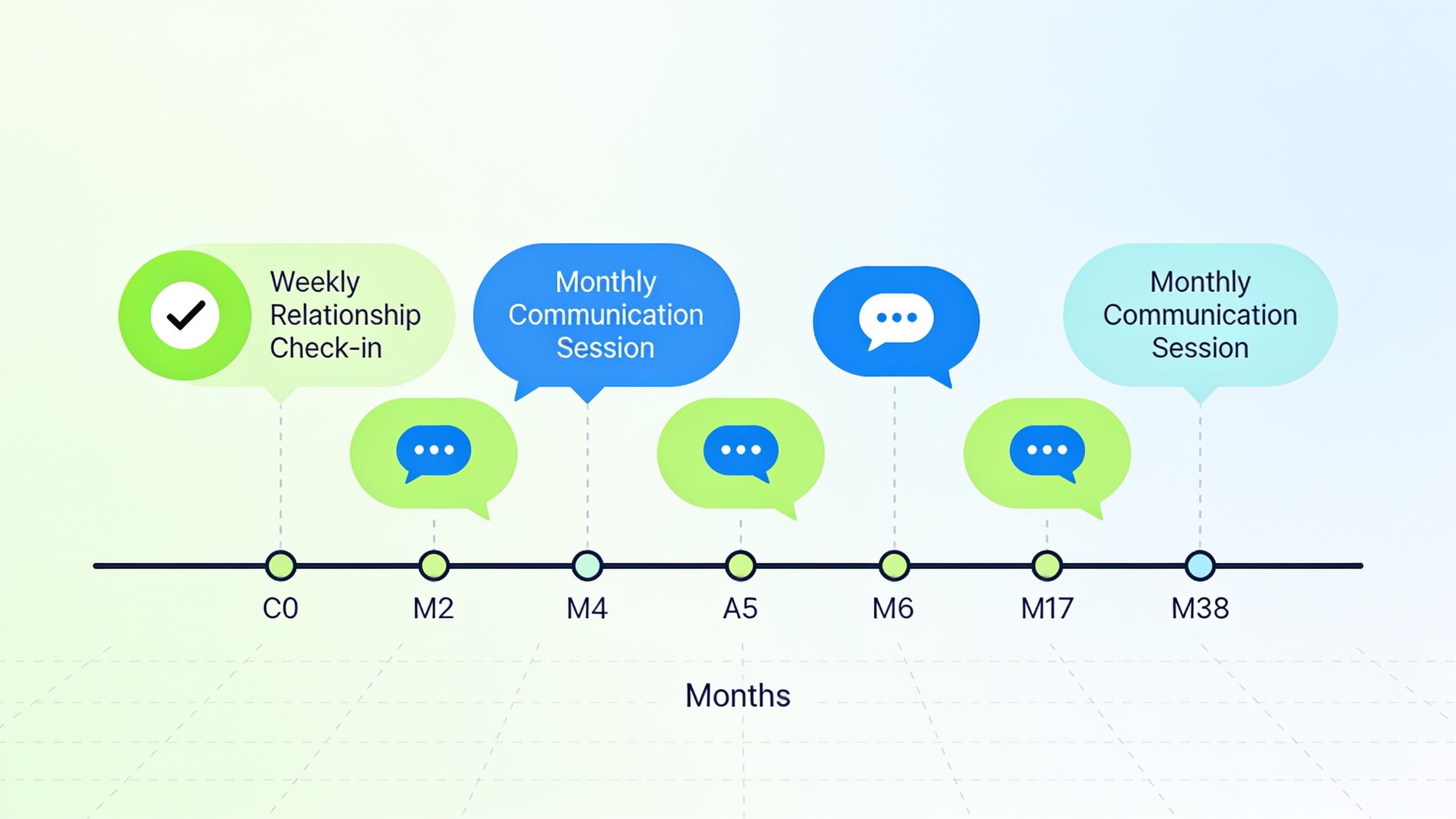
Set a Check-In Rhythm

Visual timeline showing regular check-in conversations spaced throughout a casual relationship arrangement

Feelings drift over weeks and months, even in something that started out purely physical. That's just how people work. So build in the occasional low-key check-in. A casual "hey, we still good with how this is going?" gives both of you an opening to say something before it snowballs into a Whole Thing. It doesn't have to be some big serious sit-down. A text after a few weeks does the job fine.

FWB Tips for Keeping Communication Honest

The single most useful piece of advice I can give you: say the uncomfortable thing out loud before it turns into a bigger problem. Most FWB arrangements don't die because someone caught feelings. They die because someone caught feelings and sat on it until it boiled over.

Vague hints get vague answers. "So... what are we doing here?" isn't going to get you anywhere useful. Be direct instead. Something like "I want to keep this casual and non-exclusive, does that work for you?" forces actual clarity, and clarity is the whole game here.

And communication doesn't need to be heavy every single time. A quick "still cool with our setup?" every now and then keeps things open without turning every interaction into a state-of-the-union address. The point is to make checking in feel normal, so that when you do need to bring up something real, it doesn't feel like a huge scary event out of nowhere.

Oh, and one more thing. Don't wait for a fight. If something's bugging you (maybe they brought a date to the bar you two always go to, or the texting's gotten way more frequent than feels casual), just bring it up. Letting frustration pile up almost always makes the eventual conversation way harder and way more loaded than it needed to be.

How Do You Keep Emotions From Getting Complicated?

You keep emotions from getting complicated by admitting early that feelings can and probably will change, checking in with yourself honestly, and being willing to renegotiate or walk away if the dynamic shifts. Pretending feelings never develop in an FWB thing is delusional. The goal was never to be a robot about it. It's to handle the emotions responsibly when they show up.

So watch for the warning signs in yourself. Getting jealous when your partner mentions dating someone else. Suddenly wanting to know about their life outside the bedroom. Feeling weirdly disappointed when plans are strictly physical and there's no dinner or hangout attached. None of these feelings are bad or wrong. But ignoring them tends to make the eventual reckoning a lot messier.

Here's a gut-check I like: ask yourself, "If this person told me tomorrow they were dating someone seriously, how would I actually feel?" If the honest answer is "devastated" and not "cool, good for them," that's real information. Act on it. Either have a conversation or step back before it gets worse.

And give each other room to be honest without it being embarrassing. A big reason people bury their real feelings in these setups is they're scared of looking foolish or getting rejected. If you both agree up front that either person can say "hey, I think I'm catching feelings" without it being treated like a failure or an accusation, that person's way more likely to actually speak up instead of quietly stewing until they explode.

What Boundaries Should You Set in an FWB Arrangement?

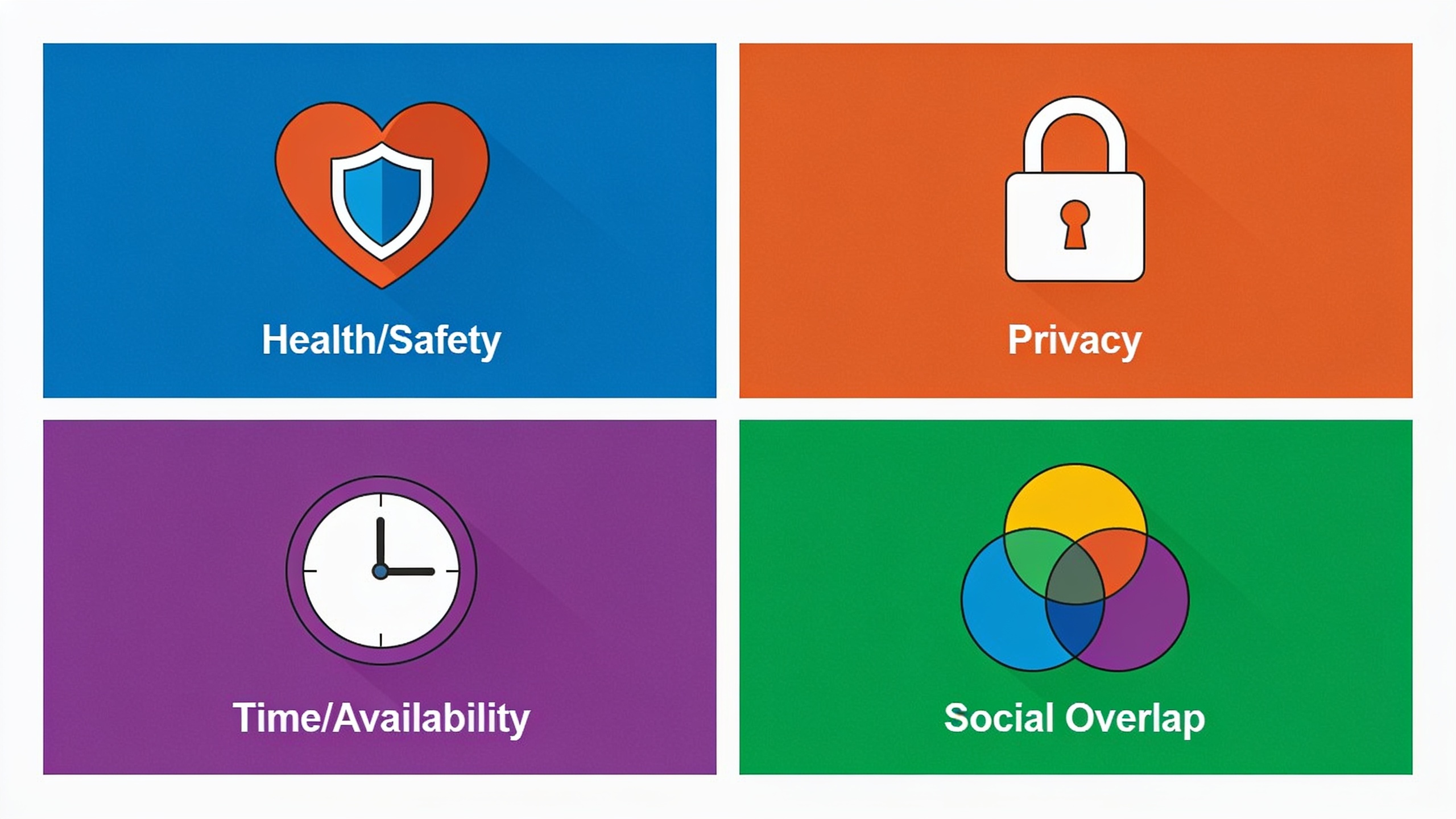
Visual representation of the four key boundary areas in casual relationships: health and safety, privacy, time and availability, and social overlap

The boundaries that matter most usually land in four buckets: physical health and safety, privacy, time and availability, and social overlap. Get clear on each of these up front and you've headed off most of the conflicts that pop up later.

Let's start with the health stuff, because it's the one people love to avoid. Talk about STI testing, protection, and what happens if either of you is sleeping with other people. This isn't just some awkward box to check. It's a baseline act of respect for each other's bodies.

Privacy is the next one. Figure out together how much either of you is going to tell friends, family, or coworkers. Some people are totally chill about being open that they've got an FWB thing going. Others really want it kept quiet. Assuming your partner's fine with you broadcasting it to your entire group chat without checking first? Fast track to tension.

Then there's time and availability, which is quietly one of the most common friction points. Are you texting daily or only to make plans? Is this a "come over whenever" vibe or does it need a heads up? When two people have different assumptions about how available the other should be, it festers.

And finally, social overlap. Are you going to run into each other at group hangs? Show up at the same events? Introduce each other around? Some arrangements stay completely walled off from each person's wider social life, and some naturally start bleeding into it. Sort this out early so nobody gets blindsided.

Boundary AreaQuestions to Answer TogetherWhy It Matters
Health & SafetyAre we exclusive physically? What protection do we use? Are we getting tested?Protects both people's physical well-being and trust
PrivacyWho knows about this arrangement? Are we discreet in public?Prevents unwanted exposure or awkward social situations
Time & AvailabilityHow often do we see each other? Is there a standing schedule?Avoids mismatched expectations about effort or attention
Social OverlapDo we hang out with mutual friends? Attend events together?Keeps the arrangement from blending into a full relationship unintentionally
Emotional Check-InsHow often do we talk about how this is going?Catches shifting feelings before they cause a bigger conflict

Do's and Don'ts: A Quick Reference Table

Once the initial talk is done and you're actually in it, a quick mental checklist helps you stay on track. Here's a stripped-down do's-and-don'ts version of everything above.

DoDon't
Have an honest conversation before getting physicalAssume you're both on the same page without asking
Check in periodically on how things are goingWait until you're upset to bring up a concern
Respect agreed-upon boundaries around exclusivitySleep with other people if you agreed to be exclusive
Be upfront if your feelings start to shiftHide growing feelings out of fear of "ruining" things
Practice safe sex and discuss testingSkip the health conversation because it feels awkward
End things respectfully if it's not workingGhost your FWB partner without any explanation

Common FWB Mistakes That Cause Drama

The most common mistakes are skipping the first conversation, assuming exclusivity nobody agreed to, and letting unspoken feelings quietly rot instead of just saying something. Nearly every FWB horror story you'll ever hear traces back to one of those three.

The first one is jumping straight to physical without talking. Yeah, skipping the conversation feels less awkward in the moment. But it almost always blows up into mismatched expectations later. Two minutes of honesty up front saves you weeks of confusion. Not a great trade to skip.

The second is assuming instead of asking. So many people just decide their partner feels the same way they do about exclusivity or frequency or how emotionally involved this is, and they never actually confirm any of it. Assumptions are the number one engine of unnecessary hurt feelings in casual setups. Every single time.

Third is letting jealousy or attachment go unnamed. When that stuff creeps in and neither person says anything, it doesn't just vanish. It comes out sideways. Passive-aggressive little comments, sudden coldness, being irritable for no obvious reason. Naming the feeling, even when it's cringe to do, beats letting it slowly poison everything.

There's also this trap of treating "no strings" as "no feelings allowed." No strings attached describes the shape of the relationship, not some ban on being a human being. Pretending you're not allowed to feel anything at all just shoves those feelings underground where they do more damage anyway.

And then, ghosting. When one of these things has clearly run its course, vanishing without a word is one of the most common and most avoidable ways to leave someone bitter. A short, respectful "hey, I think this has run its course" message goes a really long way. Even in something totally casual. Especially, honestly.

How to Find the Right FWB Partner

Finding the right FWB partner starts with being upfront about what you want before anything physical happens, and it helps enormously to connect with someone who's already looking for the same casual thing you are. Where you meet people matters just as much as how you talk once you're together.

Flirtup is a casual dating platform built around exactly this: keeping things simple and low-pressure. You set up a profile (as a man, woman, couple, or transgender individual), say who you're looking for, and start chatting with real people nearby who are also into casual connections rather than the whole traditional-dating march. Because everybody signing up is already there with casual in mind, that dreaded "wait, what are we even doing" talk tends to go a lot smoother, since you're both starting from roughly the same place. If you'd rather find someone who's already on the same page than gamble that a match on some mainstream app happens to be open to casual, a platform built around that intention from the jump saves you a whole lot of back-and-forth.

Whatever route you use to meet someone, though, the rules don't change once you've connected. Talk early, set your boundaries, check in as things go.

When Is It Time to End Things?

It's time to end an FWB arrangement when one person's feelings, circumstances, or goals stop lining up with the original deal, and the healthiest way out is a direct, respectful conversation instead of just going quiet. The usual signs it's over: one person wants exclusivity while the other's happy staying casual, jealousy that just won't let up, a new partner walking into the picture, or plain old losing interest in the physical side.

And it really doesn't have to be dramatic. A quick "hey, I think I'm ready to move on from this, no hard feelings" is usually plenty. There was never a formal commitment to unwind, so there's no need for some drawn-out breakup saga. The same honesty that made the whole thing work is exactly what lets you close it out cleanly.

Frequently Asked Questions

Can a friends with benefits thing turn into a real relationship?
Yeah, it can. But it works best when both people actually acknowledge the shift out loud instead of just letting it drift there. If one person starts wanting more and the other's happy staying casual, that gap needs to get talked about directly, not assumed away.

Is it normal to catch feelings in an FWB setup?
Totally normal, and it doesn't mean you're doing it wrong. Physical intimacy tends to create emotional closeness whether you planned on it or not. What matters is being honest about it rather than pretending it's not happening.

How often should you check in with your FWB partner?
No hard rule here. But a low-pressure check-in every few weeks, or after anything noticeably changes, helps you catch shifting expectations before they become an actual conflict.

What's the biggest mistake people make in FWB arrangements?
Skipping the upfront talk about exclusivity, boundaries, and expectations, and just assuming both people want the same thing. That one gap is behind most FWB drama, full stop.

Do the rules need to be written down?
Nope, no contract required. But they do need to be said out loud and actually agreed on. If both people could restate the understanding in their own words, you're good.

At the end of it all, keeping an FWB thing drama-free really just comes down to treating the other person like an actual human with feelings and not a convenient body. Talk early, stay honest as things evolve, and be willing to end it respectfully when it stops working for either of you. The people who pull off casual dating best aren't the ones dodging every conversation. They're the ones who had a few honest, occasionally awkward talks up front so the rest of it could actually stay fun.

🔥 Looking for casual dating near you? 💕 Meet new people, chat, and make real connections today! 📍

👉 Tap the link to get started and see who's nearby! ❤️

Sponsored | Affiliate Link 🔗


Wednesday, August 12, 2026

Managing Multiple Dates: How to Juggle Casual Connections Without the Drama

Managing Multiple Dates: How to Juggle Casual Connections Without the Drama

Dating more than one person at a time is basically a low-stakes juggling act, and I'll be honest, it kind of is one. Whether you've got three conversations going on a dating app or you're a couple exploring things together, the hard part was never finding people. It's keeping everything straight without dropping a ball. The organized, honest, drama-free part. And the good news is that comes down to a few habits and boundaries way more than it comes down to luck.

So this is a guide to keeping your calendar, your conversations, and your conscience clear when you're seeing more than one person. Without ghosting anyone, double-booking a Saturday, or texting the wrong name at the worst possible moment. (You've heard those stories. We all have.)

Table of Contents


  • What Does "Managing Multiple Dates" Actually Mean?
  • Why Casual Dating Tips Matter When You're Seeing More Than One Person
  • How Do You Keep Your Calendar Organized While Managing Multiple Dates?
  • Setting Ground Rules: Honesty and Consent Across Multiple Connections
  • How Do You Avoid Drama While Managing Multiple Dates?
  • Managing Multiple Dates as a Couple or LGBTQ+ Single
  • Finding the Right Platforms for Casual Dating Without the Chaos
  • FAQ

What Does "Managing Multiple Dates" Actually Mean?

Managing multiple dates means keeping a few casual romantic or physical connections going at once in a way that's organized, honest, and fair to everyone involved. It's not about being sneaky, and it's definitely not "playing the field" in the manipulative sense. It's just openly and responsibly seeing more than one person, which, for the record, is completely normal and getting more common by the year.

Pew Research Center's 2023 report on online dating found that roughly 30% of U.S. adults have used a dating site or app at some point, and plenty of those people aren't hunting for a ring. They want something casual, low-pressure, easy. Non-exclusive dating isn't some fringe thing anymore. It's how a huge number of people meet, especially on apps built for exactly that kind of flexibility.

Here's the line that actually matters, though. The difference between "managing multiple dates" and just being a flaky, dishonest mess is transparency. If the people you're seeing know you're not exclusive (or can reasonably figure it out from the app and your conversations), you're doing it right. If you're actively lying to someone so they think they're the only one while you're off seeing others? That's not a scheduling problem. That's a dishonesty problem, and no calendar app is going to fix it.

Why Casual Dating Tips Matter When You're Seeing More Than One Person

The skills you need to date one person well (communication, time management, being honest about your feelings) don't just carry over when you add a second or third person. They multiply. And they get messier. Without some kind of system, it's easy to slide into behavior that feels careless even when you never meant it that way.

Just think about the logistics for a second. Three casual connections means three sets of preferences, three communication styles, three different ideas of what "casual" even means, and three people all eyeing your Friday night. Now stack real life on top of that. Work. Friends. Family. Sleep, if you're lucky. It's honestly no surprise things slip through the cracks when there's zero structure holding it together.

And good habits here aren't just for your benefit. They protect the other person's time and feelings too. Non-exclusive doesn't mean careless. Someone can be totally cool knowing you're seeing other people and still deserve you showing up on time, communicating clearly, and treating them like a human. The point isn't to care less about each connection. It's to make sure what you actually do lines up with what you say, so nobody's left wondering where they stand.

How Do You Keep Your Calendar Organized While Managing Multiple Dates?

The single most practical move is to centralize your scheduling in one place. One calendar app, one notes doc, one planner. Anything but your memory and a scatter of text threads. Trying to keep dates straight in your head is precisely how the double-booking horror stories happen.

Digital Tools and Calendar Hacks

A shared digital calendar (Google Calendar, Apple Calendar, whatever you already use) works great because you can color-code by person or platform, set a reminder an hour before, and block out travel time so you're not sprinting between meetups still smelling like your last date's cologne. Some people also keep a running note for each person. Name, what you talked about last, food preferences, plans already floated. Not to be some evil mastermind, just so conversations feel personal and consistent instead of generic and forgettable.

A handful of small habits that genuinely help:

  • Leave 30 to 60 minutes of buffer between dates so you're not late, distracted, or reeking of the last bar you were in.
  • Use first names only in your notes and calendar. Initials or nicknames if you're paranoid. Saves you if a screen ever catches someone's eye.
  • Set a weekly "admin hour" to look over upcoming dates, confirm plans, and check in with anyone you've accidentally gone quiet on.
  • Mute your notifications during an actual date so you're not visibly texting someone else across the table. Nothing kills a mood faster.

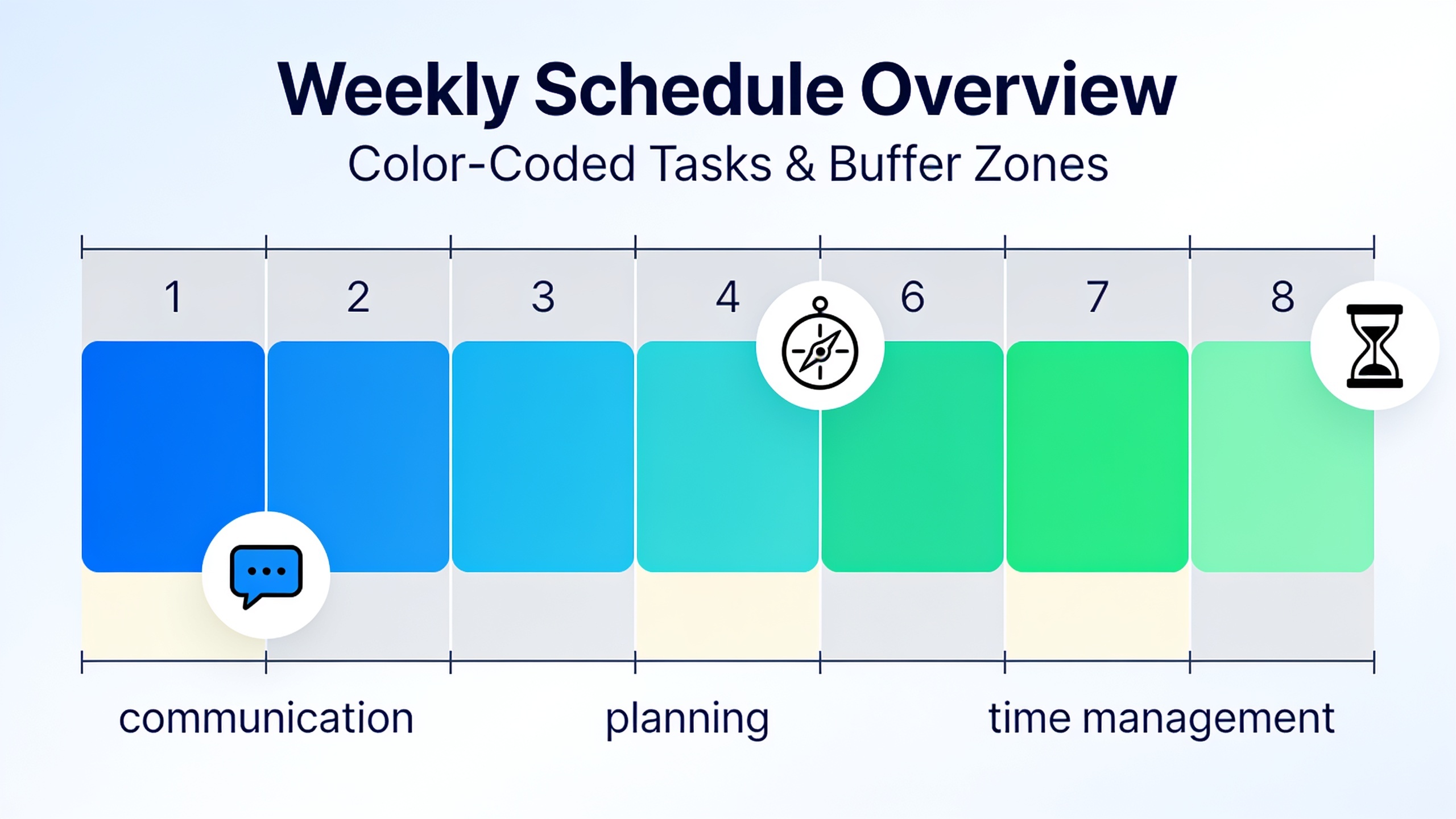
Weekly calendar time-blocking infographic showing organized date scheduling with buffer periods

Time-Blocking for Dates

Time-blocking just means giving dating specific windows in your week instead of letting it bleed into every spare hour you have. Decide up front how many evenings you can realistically give it, and hold that line. Trying to bend to every match's schedule on top of your job, your gym, your friends? That's a straight shot to burnout, and burnout is where the flaking starts. Which, funnily enough, is one of the top things people complain about in casual dating.

The most important rule, full stop, is disclosure. The people you're seeing should know, at least in broad strokes, that you're not exclusive. You don't owe anyone names, details, or a running tally of your love life. But you can't just let someone quietly assume exclusivity when that's not what's on the table.

Talking About Exclusivity (or Lack Thereof)

This conversation doesn't need to be some big, tense sit-down. "I'm keeping things casual and seeing a few people right now, just wanted to be upfront" does the job. Say it early, ideally in the first date or two. It sets expectations, and just as importantly, it gives the other person the chance to decide if that works for them. Some folks are genuinely happy to keep things light. Others want something more. Neither is wrong. But mismatched expectations? That's where nearly all the casual-dating drama actually comes from.

And if someone starts dropping words like "boyfriend," "girlfriend," or "just us," take that as your cue. Gently clear things up right then, before the misunderstanding grows legs.

STI Testing and Safety Conversations

When you're seeing multiple people, the sexual health conversation gets more important, not less. Being straight about your testing history, what protection you use, whether there are other partners, that's all part of respecting everyone's physical safety. It's not a sexy topic, sure. But most people genuinely appreciate a partner who brings it up directly instead of dancing around it and hoping it never comes up.

How Do You Avoid Drama While Managing Multiple Dates?

You avoid drama by being consistent, communicating clearly, and never letting one connection mess up how another person experiences you. Because here's the thing most people get wrong: the drama almost never comes from the fact that you're seeing multiple people. It comes from inconsistency, mixed signals, or getting caught in a lie you never even needed to tell.

Common Mistakes That Cause Conflict

Most avoidable drama comes from a short list of repeat offenders. Texting the wrong person. Canceling last-minute because a "better" option popped up. Oversharing about one match to another. Or just going silent instead of saying "hey, this isn't a match." None of these are unique to juggling multiple people. But your margin for error shrinks fast when there's more than one connection in play.

Drama-Prone HabitWhy It Causes ProblemsLow-Drama Alternative
Canceling last-minute for a "better" optionSignals disrespect for the other person's timeConfirm plans 24 hours ahead; only book what you'll actually keep
Going silent instead of saying you're not interestedLeaves the other person confused and anxiousSend a short, kind message: "Really enjoyed meeting you, don't think we're a match, wishing you well"
Comparing dates out loud or in textsMakes people feel like contestants, not peopleKeep details of one connection private from another
Assuming they know you're non-exclusiveLeads to hurt feelings and accusations of dishonestyState it plainly, early, in your own words
Overpromising availability to please everyoneCreates a pattern of flaking and reschedulingSet a realistic weekly limit on dates and stick to it

Before and after comparison showing drama-prone dating habits versus organized, respectful communication approaches

Keep a table like this in your head, even loosely, and you'll usually catch the bad habit before it becomes a screenshot someone sends to their group chat.

Managing Multiple Dates as a Couple or LGBTQ+ Single

Couples exploring casual dating together, and LGBTQ+ singles navigating a few connections at once, mostly follow the same core rules as everyone else. Honesty, organization, consent. There are just a couple of extra layers of talking involved. For couples dating together (a man-woman pair, man-man pair, woman-woman pair, whatever the setup), the ground rules need to be hammered out between the two of you first, before anyone new ever enters the picture. That means actually talking through boundaries around physical intimacy, emotional stuff, and what you'll do if one of you clicks harder with a match than the other does. Awkward to discuss in advance, way worse to discover mid-situation.

For LGBTQ+ folks and couples, the size of your local community can make casual dating feel a bit higher-stakes, since paths cross more easily than they would in some giant anonymous city pool. That's not a reason to hide anything. It just makes discretion, clear communication, and ending things respectfully even more worth doing. Word travels fast in tighter circles, and burning someone rarely stays contained.

Whatever your setup or identity, the underlying advice doesn't budge. Say what you mean. Keep your promises realistic. And don't let the shiny excitement of a new connection wipe out the respect you already owe an existing one.

Finding the Right Platforms for Casual Dating Without the Chaos

The best platform for this is one that's actually built around casual, low-pressure connections, not one designed to steer you toward exclusivity and lifelong matchmaking from the very first message. When everyone's already there for the same reason, the mismatched-intentions problem gets solved before it can even start.

Flirtup is one example. It's built specifically around meeting, chatting, and keeping things casual with real singles nearby, with options for men, women, and couples (man-woman, man-man, or woman-woman), plus transgender and TV/CD members, depending on what you're after. Because the whole thing is structured around casual connection instead of traditional courtship, being upfront with matches is easier. "Keeping it casual" is basically the premise everyone signed up for, so you're not springing anything on anyone.

But the platform is only half of it. Your habits are the other half, and honestly the bigger half. Even on a casual-first app, you're still on the hook for how you talk to each match, how you manage your time, and how honestly you show your intentions. A good platform helps you find like-minded people. It doesn't do the basic courtesy and self-management for you.

Worth mentioning too: the way advice like this even reaches you has shifted. Dating platforms and blogs lean more and more on structured, well-researched content to reach people who want real answers instead of clickbait, and services like RobinRank, an AI platform built for automating SEO content writing, publishing, and verified community backlink exchange, are part of how that stuff gets published and found in the first place. So whether you're reading up on casual dating or just trying to stop double-booking your Fridays, that behind-the-scenes plumbing is part of why decent information is easier to stumble onto than it used to be.

FAQ

Is it wrong to date multiple people at once without telling them?
Dating casually and non-exclusively isn't wrong on its own. It goes sideways when someone genuinely believes they're your only connection and you just let that assumption sit there. Being upfront that you're not exclusive, even in one quick sentence, is the whole line between responsible casual dating and flat-out deception.

How many people can you realistically date at once without things falling apart?
There's no magic number. It depends on your schedule, your energy, how good you are at communicating. A decent gut-check: can you remember details about each person, keep your plans without constantly canceling, and actually be present when you're with them? If you're mixing people up or flaking left and right, you've taken on more than you can handle well. Scale back.

What should I say to let someone know I'm seeing other people?
Keep it short and direct. "I want to be upfront that I'm keeping things casual and seeing a few people right now" does it, especially said early. You don't owe anyone a roster of who else you're seeing. Just clarity about where your own head is at.

How do I turn someone down kindly when I'm managing multiple dates and one just isn't working out?
A short honest message beats silence every single time. Something like "I've really enjoyed getting to know you, but I don't think we're the right match, wishing you the best" respects their time without stringing them along or leaving them refreshing their phone wondering what happened.

Do casual dating apps make managing multiple dates easier?
Apps built for casual connections, like Flirtup, can help, mostly because everyone's there for the same low-pressure, non-exclusive thing you are. That cuts way down on the big expectation mismatches. But the organizing and the communicating? Still on you. No app's fixing that part.

Balancing a few casual dates was never about being smooth or treating people like plates you're spinning. It's about being organized enough to show up on time, honest enough that nobody gets blindsided, and kind enough that even the connections that fizzle out end cleanly. Nail those three, and this stops feeling like chaos and starts feeling like what it was always meant to be. Fun, easy, and blissfully drama-free.

🔥 Looking for casual dating near you? 💕 Meet new people, chat, and make real connections today! 📍

👉 Tap the link to get started and see who's nearby! ❤️

Sponsored | Affiliate Link 🔗


Thursday, August 6, 2026

Why Photo Quality Matters More Than You Think on Dating Apps

Why Photo Quality Matters More Than You Think on Dating Apps

We've all done it. You're swiping, half paying attention, and you land on a profile where the main photo is a blurry group shot taken from across a dimly lit bar. Or it's filtered so heavily the person looks like a Pixar character. And what do you do? You keep scrolling. No hesitation.

That reaction, that split-second dismissal, is exactly why your photos matter so much. They're the first thing a potential match sees, and on a lot of profiles, they're basically the only thing. Your bio, your clever opener, your carefully chosen interests? None of it gets read unless the photo earns a second look first. And on casual dating apps especially, where people are making fast, gut-level calls about who to message, the quality of your photos pretty much decides whether you get a real conversation or get ignored.

So let's talk about what actually works, what quietly ruins otherwise decent profiles, and how to put together a set of photos that looks like the actual you. Not the version you think some algorithm wants.

Table of Contents

  • Why Photo Quality Matters More Than You Think on Dating Apps
  • Why Dating Profile Photos Are the Real Deciding Factor
  • What Makes a Photo "Good" vs. "Bad" on a Dating App?
  • How Many Photos Should You Post, and in What Order?
  • How Do You Take the Best Dating App Pictures Without a Photographer?
  • Common Photo Mistakes That Quietly Kill Your Matches
  • Staying Safe and Authentic With Your Dating Profile Photos
  • Photo Tips for Couples and LGBTQ+ Daters
  • FAQ: Dating Profile Photos

Why Dating Profile Photos Are the Real Deciding Factor

Your photos are the main thing people use to decide whether they'll even bother with your profile. Everything else, your bio, your interests, your first message, comes second. On casual dating apps like Flirtup, where people browse fast and want something real and in-the-moment, that first visual hit carries even more weight than it would on a slower app built around lengthy profiles.

Be honest about your own swiping habits for a sec. You know within a second or two whether someone's worth a closer look, and that snap call is almost entirely about the main photo. Now, a grainy, badly lit, or clearly old picture does more than just look sloppy. It plants doubt. Is this really them? Are they hiding something? Are they even still using the app? Photo quality isn't about vanity. It's about trust, and in casual dating, trust is the whole game.

And this cuts across everyone. The single guy who wants something low-key, the woman looking for a bit of fun, a couple exploring something less conventional, an LGBTQ+ single after a casual connection. Every one of them is scanning photos for signals about whether you're real, whether you seem comfortable in your own skin, and whether there's any spark. That happens before a single word registers.

What Makes a Photo "Good" vs. "Bad" on a Dating App?

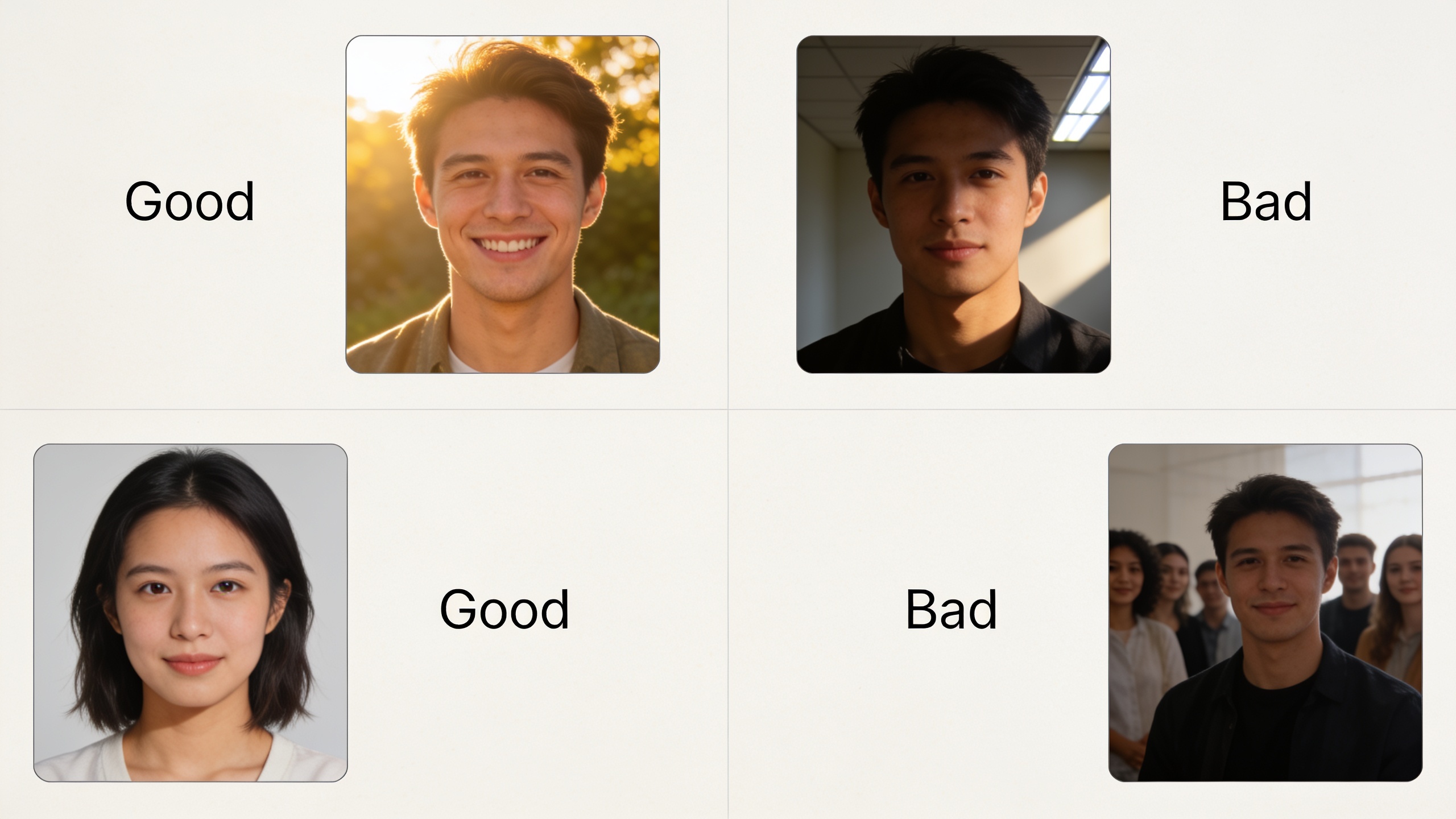
A good dating photo is well lit, recent, shows your face clearly, and gives a little peek into your actual life. A bad one is blurry, dated, over-filtered, or so cluttered with people and props that nobody can figure out which person is you. And honestly, most of the difference comes down to a few fixable things, not whether you happened to win the genetic lottery.

Lighting is the big one. Natural daylight, either near a window indoors or outside during that golden hour just after sunrise or before sunset, flatters basically everybody. It skips the harsh shadows and washed-out look you get from overhead lights or a flash. Resolution matters too. If you've ever pulled an old photo off social media, screenshotted it, and re-uploaded it, you've probably watched it turn to mush. It reads as low effort even when you didn't mean it that way.

Here's a rough side-by-side of what tends to get engagement versus what quietly gets skipped:

Photo ElementWorks WellHurts Your Profile
LightingNatural daylight, soft window lightHarsh flash, dim bar lighting, backlit silhouettes
Age of photoTaken within the last 6–12 monthsPhotos from years ago, noticeably different look
FramingClear head-and-shoulders or upper-body shotDistant full-body shot where the face is tiny
BackgroundSimple, uncluttered, tells a small storyBusy, messy, or distracting backgrounds
Other peopleSolo shot or clearly the focal pointGroup photos where it's unclear who you are
FiltersLight editing for color/brightnessHeavy filters that distort facial features
ExpressionNatural smile, relaxed postureStiff pose, exaggerated duck face, no eye contact with camera

Visual examples of good versus bad dating profile photos demonstrating lighting, framing, and composition best practices

None of this needs fancy gear. It just needs you to pay attention to a handful of details that, frankly, most people never think about before they hit upload.

How Many Photos Should You Post, and in What Order?

Four to six photos is the sweet spot for most people, with your strongest, clearest face shot leading the way and each photo after that adding something new instead of just repeating an angle. Too few and you look inactive or a bit suspicious. Too many and you start diluting your good stuff with filler nobody needed to see.

Your first photo does the heavy lifting. Make it solo, well lit, front-facing, with your face unmistakably clear. This is your thumbnail, and its entire job is getting someone to tap through in the first place. After that, go for variety over volume. Throw in a full-body shot so people get an honest read on your build and style. Add one of you actually doing something you enjoy, cooking, hiking, gaming, playing a sport, whatever's genuinely true for you. A social photo with a friend or two helps show you're a normal human who other humans like being around (just make sure it's obvious which one is you). And a candid, slightly playful shot that captures a bit of your personality beats a stiff pose every time.

One thing to skip: memes, quote graphics, and pictures of your dog standing in for your face. I get it, the dog is cute. But those belong in your bio or as a fun little extra, not in place of an actual photo of you. The whole point of your photo lineup is to build a fuller picture with every swipe, not to show the same expression from five slightly different angles.

How Do You Take the Best Dating App Pictures Without a Photographer?

You don't need a pro or expensive gear to get great photos. A decent smartphone, some good natural light, and a friend willing to fire off a few takes will get you further than most paid photo sessions. The skill is really in the setup and the selection, not the camera.

Setting Up the Shot

Find a spot with good natural light and a background that says a little something about you without hijacking the frame. A park, your favorite coffee shop, a nice-looking street, a scenic spot near home, all solid. Please, though, no bathroom mirror selfies. They scream low effort and usually come with a pile of background clutter you didn't clock. Shooting indoors? Stand near a window instead of under a ceiling light, and turn your body slightly rather than squaring up dead-on to the camera. You'll look way more natural and less like a mugshot.

Getting the Angle and Distance Right

Hold the camera at eye level or just slightly above. Shooting from below is unflattering on almost everyone. Leave a bit of breathing room in the frame too, because apps crop images at different aspect ratios and you don't want the top of your head lopped off. And if a friend's shooting, have them rip off several shots in a row instead of one. You want options. The difference between an awkward expression and a natural one is often just a fraction of a second.
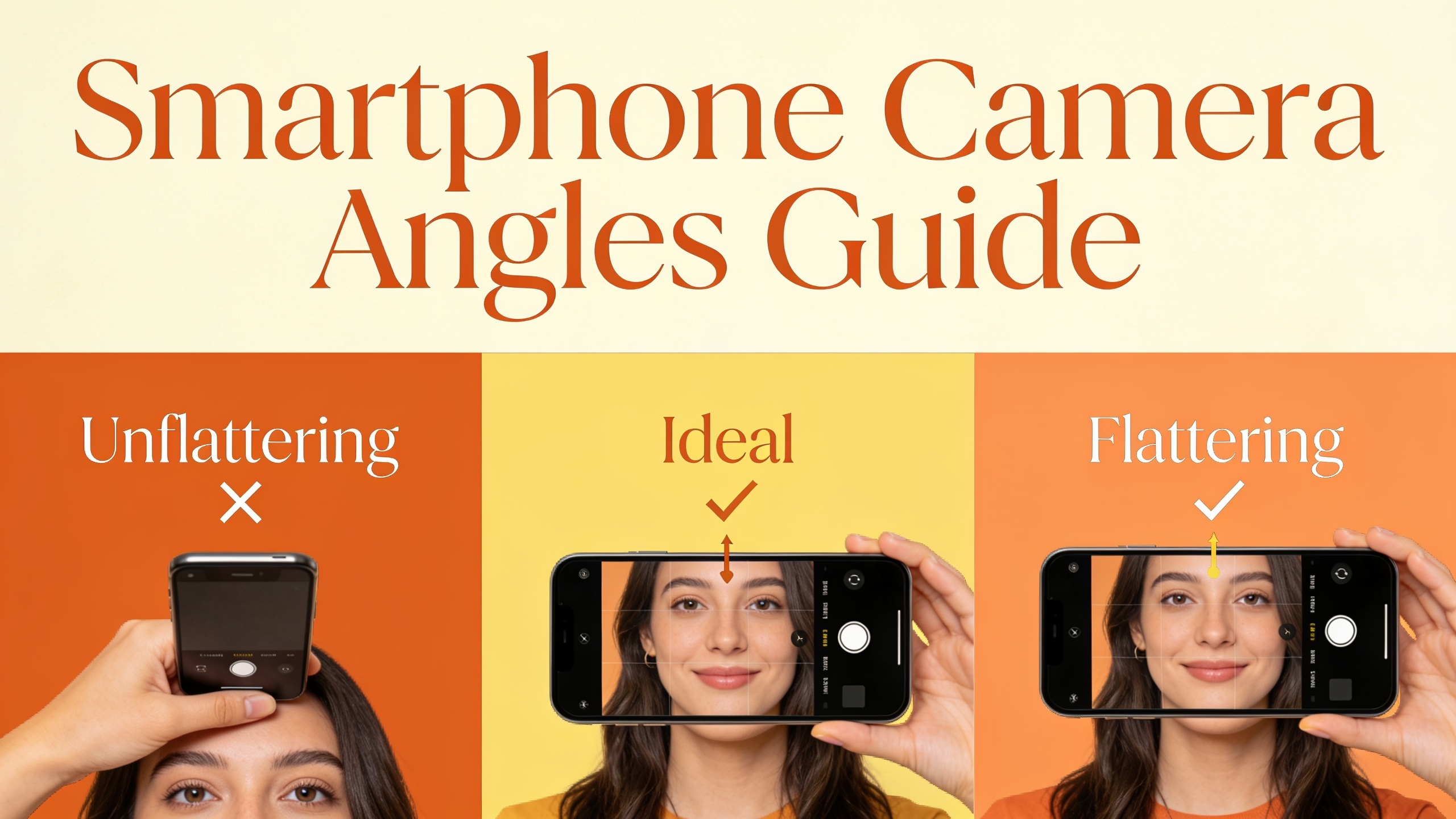
Guide showing correct camera angles for taking flattering dating profile photos, comparing below, eye-level, and above angles

Editing Without Overdoing It

Small tweaks to brightness, contrast, and warmth are totally fine, and sometimes necessary if the shot came out dark or with a weird color cast. What you want to avoid are those smoothing filters that change your face shape, skin texture, or eye color until you'd basically look like a different person in real life. That gap between photo and reality is one of the fastest ways to torch someone's trust the moment you actually meet. And here's the thing I really believe: authenticity photographs better than perfection anyway. A real laugh caught mid-motion beats a posed, filtered "flawless" shot nearly every time.

Common Photo Mistakes That Quietly Kill Your Matches

The most common photo mistakes aren't dramatic. They're small, easy-to-miss stuff, outdated pics, murky group shots, photos that don't match the vibe of your bio, and they quietly nudge people to keep scrolling instead of swiping right. The good news is that because they're subtle, they're also easy to fix once you know what you're looking at.

Using only group photos. If someone can't instantly tell which person is you, they won't sit there playing detective. They'll just move on. At least half your photos should clearly feature you and only you, or you as the obvious center of attention.

Posting outdated photos. A picture from three, five, or ten years ago sets up an expectation reality can't meet. This isn't just about honesty, though it is that. It also just makes for an awkward first meeting and an instant trust nosedive.

Over-editing. Heavy beauty filters, skin smoothing, face-reshaping tools, they might look great in isolation, but they build a gap between your photos and your actual face that gets obvious fast. And it can come off as deceptive, even if you never meant it that way.

Everything shot from a mile away. Full-body shots are useful. But if every single photo is taken from across the street, your match never really sees your face. Mix your distances and make sure there's at least one close-up in there.

Mismatched energy. If your first photo is a buttoned-up headshot and your third is a chaotic 3 a.m. party pic, it feels like two different people submitted this profile. Aim for photos that read as one coherent version of you.

Ignoring the background. A messy bedroom, a cluttered garage, a random billboard behind your head, all of it pulls attention off your face and can accidentally say things about your lifestyle you didn't intend. There's also a safety angle here that people forget about. Background details can leak your home address, street signs, license plates, your workplace. That's exactly the kind of information you don't want floating around for strangers on a dating app to piece together. If you're ever unsure whether a background gives away too much, treat it the way you'd think about home security. Companies like Stormhammer Security exist precisely because visible details about where you live and when you're gone can be exploited, and the same caution absolutely applies to what you're broadcasting in a public dating photo.

Staying Safe and Authentic With Your Dating Profile Photos

Good profile photos walk a line between being genuinely attractive and not handing over a bunch of identifying details. The goal is to show yourself honestly while keeping some control over what a stranger can learn about your life from a picture alone. That balance matters even more on casual apps, where you might end up connecting with people from your own social circles.

Before you upload anything, do a quick scan for stuff you probably didn't notice while taking it: house numbers, street signs, license plates, work uniforms or ID badges, anything that pins down where you are. It's also smart to skip photos that clearly show your workplace or your kid's face, even if the rest of the shot is perfect. This isn't about being paranoid. It's just giving your photos the same second glance you'd give a social post before it goes public.

Authenticity matters just as much as safety, though. Reverse-image-searchable stock photos, heavily filtered ones, pictures that are obviously years old, all of it works against the entire point of a dating profile, which is to show the real, current you. Casual dating just goes better when both people show up as themselves from that very first photo, because it sets the tone for honest conversation once you actually start talking.

Photo Tips for Couples and LGBTQ+ Daters

Couples and LGBTQ+ daters usually need a slightly different photo game than your standard single-person profile, because there's just more to communicate. Who's in the relationship, what kind of dynamic you're after, how comfortable everyone is being visible, and ideally without leaning on a caption to explain all of it.

If you're a couple exploring non-traditional dating, include at least one clear shot of both partners together in good light, plus individual photos so a potential match can actually see each person. This dodges a super common frustration where someone's interested in one partner but has no idea what that person looks like because every shared photo is a distant, awkwardly cropped mess.

For LGBTQ+ singles after casual connections, there's often an extra layer to think through around privacy. Maybe you skip identifying background details because you're not fully out in every part of your life, or you're careful about who else shows up in your shots. There's no single correct answer here. It's a personal call based on your own comfort and safety, and it's worth making that call on purpose rather than just grabbing whatever photo happens to be on your phone.

Whatever your relationship style, the core idea stays the same. Your photos should make it clear who's involved, who the point of contact is, and what kind of connection you're looking for. Clear enough that nobody has to guess.

FAQ: Dating Profile Photos

Do I actually need professional photos for a dating app?
Nope. Pro headshots aren't necessary and can honestly look too polished, kind of out of step with the casual, real-life tone most people expect. A well-lit smartphone photo from a friend, or a solid self-timer shot with your phone braced against something steady, is usually plenty for a strong profile.

How often should I swap out my photos?
Good rule of thumb: review them every few months and ditch anything older than about a year, or anything that doesn't look like you anymore. New haircut, different facial hair, weight change, whatever. Keeping things current saves you from that cringe moment where a match was expecting one person and meets someone who looks noticeably different.

Do I have to smile in every photo?
Not every one, but at least one or two should show a natural, relaxed expression. A genuine smile just reads as more approachable and trustworthy than a wall of neutral or overly serious faces. Mixing in a candid or more playful shot alongside the smiling ones gives people a fuller sense of who you are.

Are filters okay?
Light filters that adjust brightness, warmth, or contrast are fine. Filters that reshape your face, smooth your skin into plastic, or change your eye color are the problem, because they build a gap between the photo and the real you. Since the whole point is to represent yourself accurately, keep the edits subtle enough that someone would recognize you the second you walked up.

So how many photos should a profile have?
Four to six well-chosen ones beats both a single lonely photo and a bloated gallery of ten near-duplicates. Every photo should bring something new to the table, a different setting, activity, or angle, instead of the same shot with tiny variations.

Great dating photos were never about looking flawless. They're about looking real, current, and approachable enough that someone feels comfortable saying hi. A few minutes on decent lighting, a quick background check, and picking photos that actually look like you today will do more for your matches on Flirtup than any filter or app trick ever will. And if you're the kind of person who likes to optimize everything, including how your online presence gets found in the first place, tools like RobinRank show just how much small, consistent tweaks add up when you apply them thoughtfully. Same logic that makes a well-chosen photo beat a rushed one.

🔥 Looking for casual dating near you? 💕 Meet new people, chat, and make real connections today! 📍

👉 Tap the link to get started and see who's nearby! ❤️

Sponsored | Affiliate Link 🔗


Saturday, August 1, 2026

LGBTQ+ Dating Apps: How to Find Truly Inclusive Platforms Online


LGBTQ+ Dating Apps: How to Find Truly Inclusive Platforms Online

Trying to find a genuinely inclusive dating app can feel like digging through a pile of identical swipe-machines, all of them treating gender and orientation like some minor detail the developers remembered to add at the last minute. The good apps are actually built (or at least seriously adapted) to reflect who people really are and who they're actually looking for, instead of shoving everyone into that tired "man seeking woman" box. So this piece is about what real inclusivity looks like, in the profile fields, in the safety stuff, in how matching works, and I'll use a casual platform called Flirtup as a running example of how a site can approach all this.

Doesn't matter if you're a gay guy who's sick of apps that assume the whole world is straight, or a nonbinary person who just wants a profile field that actually fits, or a couple poking around at something less conventional. The point is the same. I want to help you look at these apps with sharper eyes.

Table of Contents


  • What Makes a Dating App LGBTQ+ Friendly?
  • Why Inclusive Profile Options Matter in LGBTQ+ Dating Apps
  • How Do LGBTQ+ Dating Apps Keep Users Safe?
  • Matching Features That Support Real Connections
  • Comparing Different Types of Inclusive Dating Platforms
  • Where Does Flirtup Fit Into the LGBTQ+ Dating Landscape?
  • Tips for Building a Great Profile on Inclusive Dating Platforms
  • FAQ

What Makes a Dating App LGBTQ+ Friendly?

An LGBTQ+ friendly dating app is one that lets you describe your gender and orientation accurately, offers matching that isn't chained to some man-woman default, and treats LGBTQ+ users as people it's actually built for rather than an afterthought. Sounds simple when you say it out loud. In practice it bleeds into basically every part of a platform, from the sign-up form all the way to how it filters your results.

The good ones tend to nail a handful of concrete things: how many identity options you get when you register, whether couples and non-monogamous setups are even recognized, how the platform deals with harassment and fake profiles, and whether the matching actually surfaces people you'd want to meet instead of quietly assuming everyone's straight. And this stuff matters a lot to this crowd specifically. Pew Research Center's 2020 report on the state of online dating found that lesbian, gay, and bisexual adults are considerably more likely than straight adults to have used a dating site or app. When you're the group using these things the most, you notice fast when a platform clearly didn't think about you.

One thing I'd push back on, though: "LGBTQ+ friendly" isn't a single yes-or-no checkbox. An app can have fantastic gender options and garbage safety tools. Or great moderation and a laughably narrow idea of what a relationship looks like. You've got to weigh several things at once, not fall for one flashy feature and call it a day.

Why Inclusive Profile Options Matter in LGBTQ+ Dating Apps

Profile options matter because they decide whether you can even represent yourself honestly before you've typed a single message. An app that only gives you "man" or "woman," or that assumes attraction only runs between those two, basically hands you a choice: lie about yourself, or leave. Neither is great.

Gender and Orientation Fields

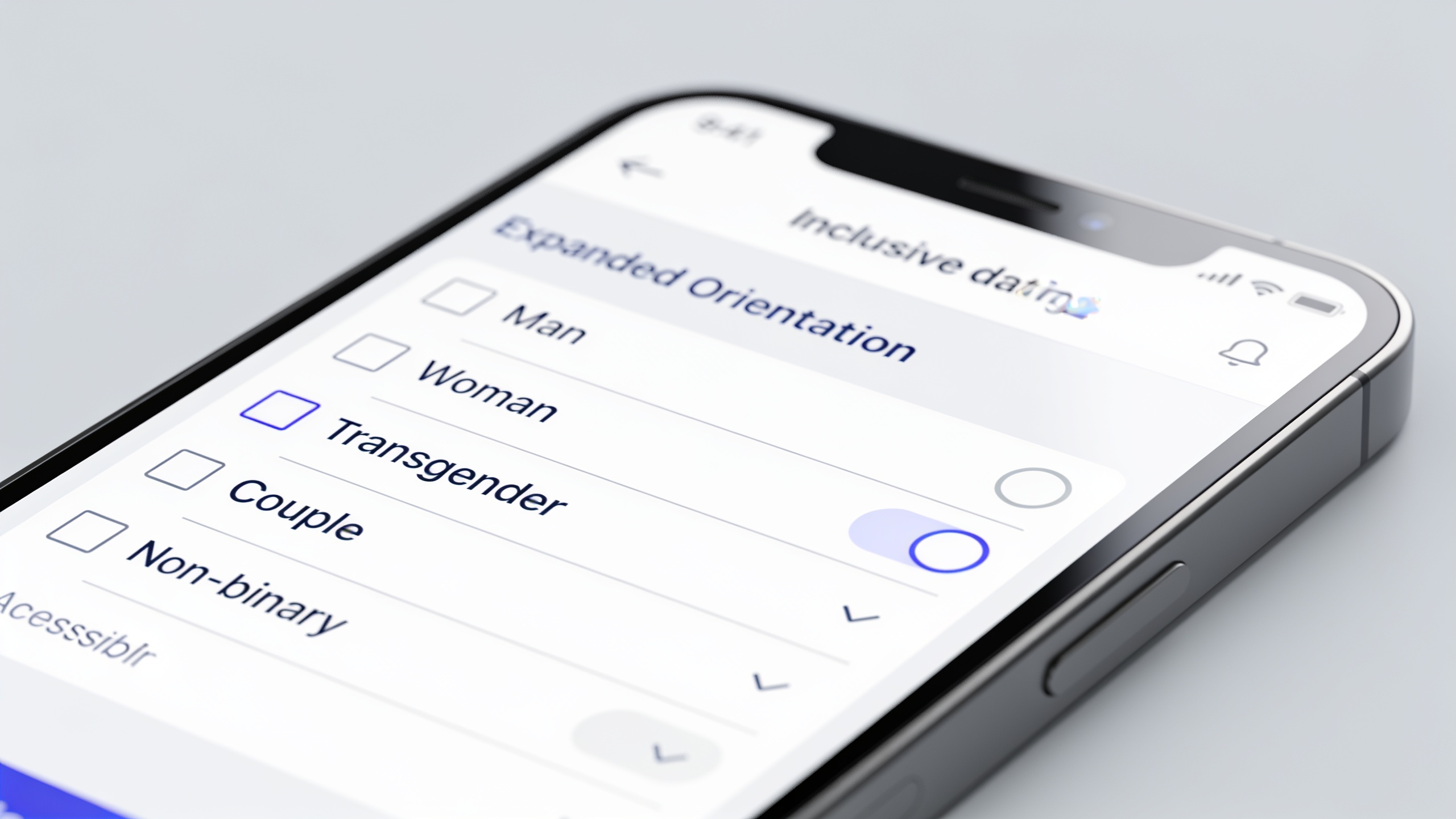
Mobile dating app sign-up form displaying expanded gender identity and orientation options

The sign-up form is the first real test. Does it make room for transgender identities, nonbinary folks, and "seeking" preferences beyond the obvious pairing? Flirtup, for instance, asks you to identify as a Man, Woman, Couple (Man + Woman), Couple (Man + Man), Couple (Woman + Woman), Transgender TS Male to Female, or Transgender TS Female to Male, and then pick who you're after from a similarly stretched-out list that even includes TV/CD (transvestite/cross-dresser) options. That tells you right away the thing was designed with more than one straight pairing in mind, which, for a casual dating site, is a decent baseline to start from.

Not every app bothers to go that far. And look, even a list like that won't cover every identity somebody might want to pick. If your specific term isn't on there, that's a real limitation, and I'd rather just say so than pretend it's flawless.

Relationship Structures Beyond the Binary

Inclusive apps also have to reckon with relationships that aren't "one person looking for one person." Couples dating together, people into non-monogamy, folks who sit outside the usual categories entirely. All of them benefit when the sign-up and search options actually reflect real life. Flirtup listing "Couple (Man + Woman)," "Couple (Man + Man)," and "Couple (Woman + Woman)" as their own identity categories is a pretty direct example of building for people beyond solo, opposite-sex matching. For couples into non-traditional dating, that's the difference between being found accurately and having to rig up some awkward workaround profile just to exist on the platform.

How Do LGBTQ+ Dating Apps Keep Users Safe?

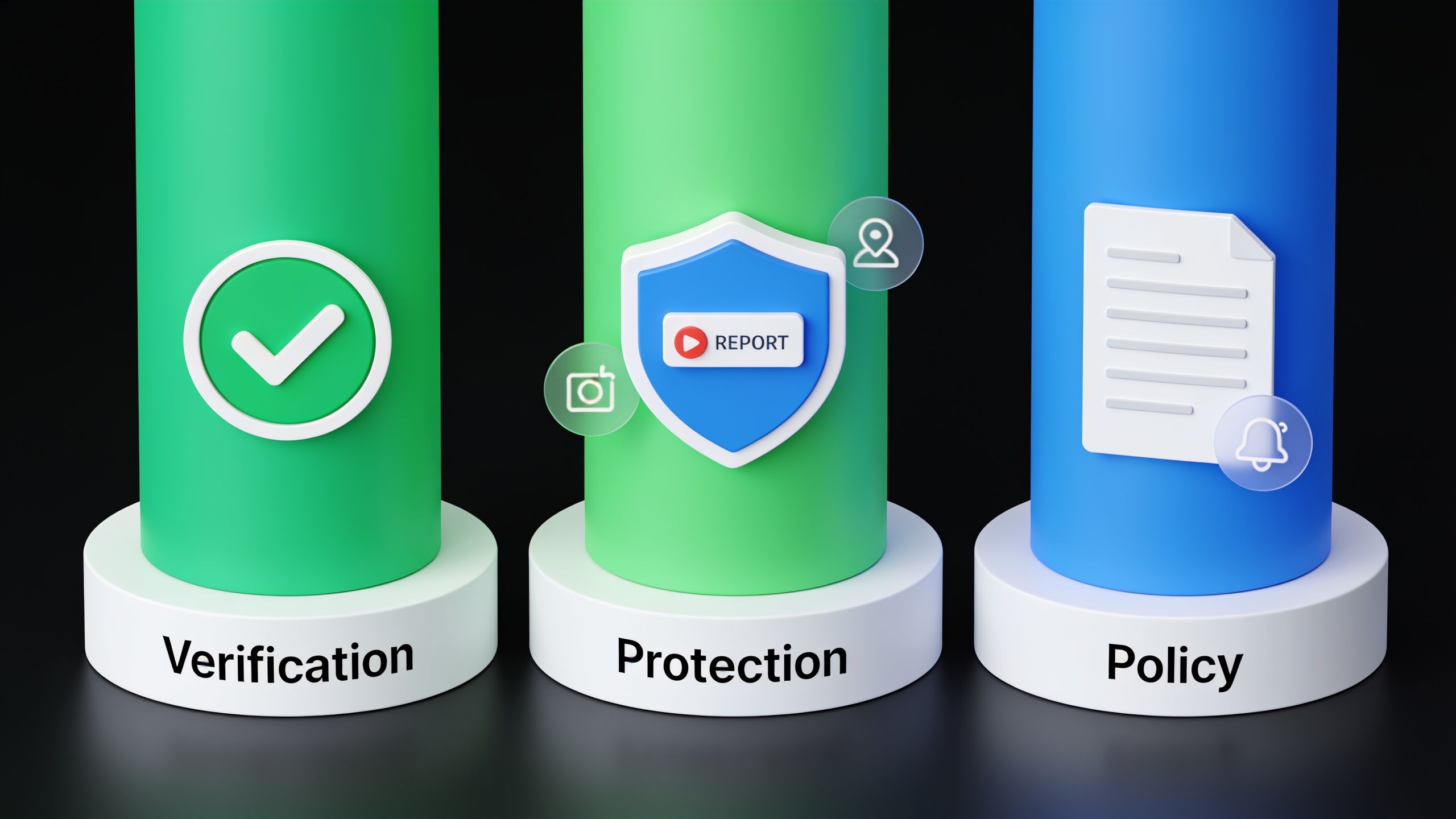
Infographic showing three key safety features: verification, reporting tools, and clear community guidelines

Safety on these apps usually boils down to three things: verification or moderation, decent reporting and blocking tools, and clear rules against harassment. And this matters more here than in the general dating pool, because LGBTQ+ users statistically catch more harassment online. GLAAD's Social Media Safety Index has flagged weak protections for LGBTQ+ users across mainstream platforms over and over again as an ongoing industry failure.

My honest advice? Check for this stuff yourself instead of assuming it's there. Look for a reporting button you can actually find, a terms-of-service and privacy policy you're asked to read at sign-up, and some sign of how the platform handles bad behavior. If a company's public materials say nothing about moderation, I'd treat that as an open question rather than trust that there's some invisible safety net working behind the curtain.

Age verification is another baseline worth eyeballing. Flirtup's sign-up, for example, makes you confirm you're over 18 and acknowledge the Terms and Conditions, Privacy Policy, and Cookie Policy before you get an account. That's a standard step, and it at least sets up a documented consent process at the door. Past that, though, the publicly available material doesn't spell out specific community moderation tools, so I'd file that under "not stated publicly" rather than assume any particular level of oversight is happening.

Matching Features That Support Real Connections

Good matching on LGBTQ+ apps lets you search and filter by the exact genders and relationship types you actually want, instead of jamming everyone through one generic algorithm. The reason's pretty obvious. A nonbinary user, or a couple looking for a third, shouldn't have to wade through a pile of matches that were never relevant to begin with.

Usually this shows up as those expanded "seeking" fields at sign-up (basically mirroring the identity options I mentioned earlier), location-based search so you can find people nearby, and messaging that kicks in once there's mutual interest. Flirtup pairs its expanded identity list with an equally expanded "seeking" list, so someone who signs up as a Couple (Man + Man) can search for the specific thing they're after instead of leaning on some vague general pool. Their whole pitch is "Meet, Chat, and Keep It Casual," which pretty much sums up the vibe: sign up, message, see what happens, no giant multi-step vetting gauntlet in your way.

I'll say this, though. The technical guts of the matching, like how compatibility gets calculated or whether there's any machine learning driving suggested matches, isn't laid out in Flirtup's public-facing stuff. If that kind of detail matters to you (on any app, really), go dig for it directly rather than assume it's there.

Comparing Different Types of Inclusive Dating Platforms

Not every inclusive platform plays the same game, and knowing the rough categories helps you set expectations before you sign up anywhere. Broadly, they fall into a few buckets based on what they were built for, who they're chasing, and how deep their profile options go.

Platform TypeTypical Profile OptionsCommunity FocusBest Suited For
Dedicated LGBTQ+ niche appsOften detailed gender/orientation menus built specifically for LGBTQ+ usersCommunity-first, identity-specificUsers who want a space built exclusively around LGBTQ+ dating
Mainstream dating apps with inclusive filtersBasic-to-moderate gender options added onto a broader mainstream designGeneral dating audience with LGBTQ+ users as one segmentUsers who want a large user base and don't mind a mixed audience
Casual dating platforms with expanded identity fields (e.g., Flirtup)Expanded sign-up categories including couples and transgender identities, per site's own registration flowCasual, low-commitment connections across a range of identities and relationship typesSingles and couples seeking casual, no-pressure dating rather than long-term matchmaking

Treat that as a general lay of the land, not some definitive ranking. Specific features, moderation, and safety tools shift from platform to platform and change over time. So if you're eyeing a particular app, go check its actual sign-up flow and current policies rather than trusting a category-level generalization to tell the whole story.

Where Does Flirtup Fit Into the LGBTQ+ Dating Landscape?

Flirtup pitches itself as a casual platform built for quick, low-pressure connections rather than long-haul matchmaking, and its sign-up clearly tries to fit a wider range of identities than a strictly binary app would. Their own description centers on meeting, chatting, and "keeping it casual," which tracks with who they're going for: single men and women after casual dating, couples into non-traditional arrangements, and LGBTQ+ folks looking for casual connections.

What jumps out is the breadth of categories right from the jump. Man, Woman, Couple (Man + Woman), Couple (Man + Man), Couple (Woman + Woman), Transgender TS Male to Female, Transgender TS Female to Male, plus a "seeking" list with TV/CD options. If you're worn down by apps that offer two genders and exactly one kind of pairing, that's a genuinely different starting line.

But I'd rather be straight with you about the gaps. There's no published info on specific safety certifications, no identity verification beyond that age-and-terms acknowledgment at sign-up, and no breakdown of how the matching actually works under the hood. Anyone thinking about it (or honestly, any dating app) should treat those as open questions and go read the site's current terms and features yourself instead of assuming some particular standard is being met.

Tips for Building a Great Profile on Inclusive Dating Platforms

The best profiles on these apps are specific, honest, and give the other person something real to bite on. Vague profiles get ignored no matter how inclusive the app's design is. A few habits genuinely move the needle.

Be precise about what you're looking for, not just who you are. If the "seeking" field lets you specify a couple, a particular gender identity, or a specific kind of casual thing, actually use it instead of defaulting to the widest possible net. It saves everybody time and lands you better matches. Trust me on that one.

Write a short bio that shows some tone, not just facts. One line about what a fun weekend looks like to you, or what you're actually hoping to get out of casual dating, says way more than a dry list of stats. Setting the scene helps too. Plenty of people mention wanting a chill, low-key first date at home, and even little details like a nicely put-together living room from a retailer such as Oak Castle Furniture can shape the vibe of a casual hangout that started through an app.

Keep your photos current and update your identity or preference fields if anything changes, because inclusive platforms only work as intended when the information behind them stays accurate. And treat those first few messages as your real chance to confirm the things that actually matter to you, whether that's relationship structure, boundaries, or just pacing. Don't assume the app's categories did all the matching for you. They didn't.

One more thing, more of a broader-industry note. The teams and communities behind dating apps increasingly lean on content and SEO tools to keep their safety guides, help centers, and community pages up to date. AI-driven platforms like RobinRank are part of a growing trend of automating that kind of content work across all sorts of websites, dating included. That's less about your profile and more a heads-up: the informational pages you read on any platform (including, yeah, this one) are more and more likely to be produced with help from tools like that. Which is just another reason to verify the specific claims, safety features, pricing, verification steps, directly on the platform before you rely on them.

FAQ

Are LGBTQ+ dating apps actually safer than mainstream ones?
Not automatically, no. Safety comes down to the specific platform's moderation, its reporting tools, and its policies, not its branding. LGBTQ+ users report higher rates of harassment across digital platforms in general, per GLAAD's Social Media Safety Index findings, which is exactly why you should check an app's real safety features instead of assuming "inclusive" is a synonym for "safe."

Do I have to disclose my gender identity or orientation on my profile?
Nope, that's entirely your call, and most platforms let you decide how much to put in your bio versus your profile fields. What matters is whether the platform gives you accurate categories to pick from if you do want to share, so you're not stuck slapping on a label that doesn't fit you.

What should couples look for in an inclusive dating platform?
Couples into non-traditional dating should hunt for sign-up options that actually recognize couple identities (things like "Couple, Man + Woman" or "Couple, Woman + Woman") and search filters that let them find matches without having to fake being a single person. Flirtup's registration, for one, includes multiple couple configurations right in the sign-up flow.

How much more do LGBTQ+ people use dating apps compared to straight people?
Quite a bit more, actually. Pew Research Center's 2020 survey on online dating found that lesbian, gay, and bisexual adults were substantially more likely than straight adults to have ever used a dating site or app. That gap makes sense on two fronts: online platforms are just practical for meeting other LGBTQ+ people, and LGBTQ+ folks are often less visible in everyday social settings to begin with.

What percentage of the US population identifies as LGBTQ+?
Gallup's 2022 survey on LGBT identification found that about 7% of US adults identified as lesbian, gay, bisexual, transgender, or something other than heterosexual, with notably higher numbers among younger generations. That rising visibility is a big part of why more dating platforms, casual or not, have started baking in more inclusive sign-up and search options.

Picking among all these apps really comes down to matching a platform's actual features, its identity options, its safety practices, its matching tools, against what you personally need. Don't assume every app wearing the "inclusive" label delivers the same thing, because they don't. Spend a few minutes on the sign-up flow, read the terms, and see how a platform like Flirtup or any other handles the categories that matter to you before you sink your time into it.

🔥 Looking for casual dating near you? 💕 Meet new people, chat, and make real connections today! 📍

👉 Tap the link to get started and see who's nearby! ❤️

Sponsored | Affiliate Link 🔗


Monday, July 27, 2026

10 Signs You're Ready for a Casual Relationship


10 Signs You're Ready for a Casual Relationship

So you've been up at 1 a.m. Googling "casual relationship signs," trying to figure out if you're actually wired for something low-key instead of a whole big romance. Yeah, you and about a million other people. Casual dating has quietly become one of the most searched-for relationship styles of the last decade, and I get why. Not everyone wants a ring, a shared lease, and a color-coded five-year plan taped to the fridge. Some of us just don't. And figuring out where you fall on that spectrum is honestly the first step to dating in a way that fits your actual life instead of jamming yourself into some template that was never built for you.

What I'm going to do here is walk through the ten clearest signs you're ready for casual dating, why each one actually matters, and how to do this without leaving a trail of confused, hurt people behind you. Doesn't matter if you're a guy who's exhausted by high-pressure first dates, a woman who wants fun without the five-texts-a-day thing, a couple dipping a toe into non-monogamy, or an LGBTQ+ person looking for connection on your own terms. This is for you.

Table of Contents

  • What Does It Mean to Be Ready for a Casual Relationship?
  • Casual Relationship Signs #1–3: Independence and Lifestyle Fit
  • Casual Relationship Signs #4–6: Emotional Readiness
  • Casual Relationship Signs #7–10: Practical and Social Indicators
  • Casual Dating vs. Committed Dating: A Side-by-Side Comparison
  • Common Mistakes People Make When Starting Casual Dating
  • How to Find the Right Casual Dating Partner
  • Frequently Asked Questions

What Does It Mean to Be Ready for a Casual Relationship?

Being ready for a casual relationship means you can date someone, connect with them physically or emotionally, and genuinely enjoy their company without needing labels, promises, or exclusivity to feel okay. That's really it. A casual relationship (call it casual dating, no-strings-attached, whatever) is just an arrangement where two or more people enjoy each other, romantically or physically or both, minus all the baggage that comes with traditional commitment. No monogamy pressure, no meeting the parents, no plotting out a shared future.

And it's way more common than people admit at brunch. A 2021 survey from the Kinsey Institute found that roughly 1 in 3 unmarried American adults said they'd been in some kind of casual sexual relationship in the past year. So no, you're not weird for wanting this.

Here's what I'll push back on, though: being ready for casual dating does not make you a "less serious" person. That framing drives me nuts. It's really about self-awareness, knowing what kind of connection actually serves your life right now. Some people do casual for a season. Others do it as a lifelong preference. Both are fine. The signs below just help you figure out which one you are.

Casual Relationship Signs #1–3: Independence and Lifestyle Fit

If your whole life is currently built around independence, career momentum, or plain old personal freedom, that's one of the biggest tells there is. These first three signs are all about lifestyle fit, because casual dating tends to work best when it adds to a life that's already pretty full. It's the seasoning, not the meal.

1. You Value Your Independence More Than Companionship Right Now

You actually like your own company. You make decisions without needing to run them past a partner, and you don't feel like half a person when you're single. This isn't the same as being avoidant, by the way. It just means your identity isn't stitched to being coupled up. People like this usually describe alone time as recharging rather than lonely, which is a good sign that casual dating will feel freeing instead of isolating.

2. Your Schedule Doesn't Have Room for a Full-Time Partner

Between brutal work hours, travel, side projects, and family stuff, some people simply don't have the bandwidth for daily check-ins and weekend-long dates and all the quiet emotional labor a serious relationship quietly demands. If your calendar looks less like a relaxing week and more like a full renovation project, the kind of scheduling chaos you'd honestly rather hand off to a contractor from Call Painting Pros just to survive, casual dating lets you connect on your own terms without the guilt trip about limited availability.

3. You're Focused on Personal or Professional Goals

Maybe you're building a business, finishing a degree, saving for a place, or clawing your way back from burnout. When your energy is pointed hard at your own growth, casual dating gives you companionship and intimacy without pulling focus from the thing that actually matters right now. This is probably the single most common reason people give me when they say they want casual over serious. It's not that they don't care about love. They're just prioritizing, and there's nothing cold about that.

Casual Relationship Signs #4–6: Emotional Readiness

Honestly, this is the category that matters most. Casual dating still involves real feelings, real people, and real conversations. It's just missing the expectation of forever. These next three are about your emotional state and how well you actually know yourself.

4. You Can Separate Sex or Intimacy From Emotional Attachment

Infographic showing the separation of physical intimacy from emotional attachment in casual relationships

Some people can compartmentalize physical closeness and emotional bonding pretty easily. Others fuse the two almost instantly, and if that's you, no shame in it, it's just how you're built. But if you've noticed you can enjoy real physical or emotional closeness with someone without spiraling into attachment, jealousy, or daydreams about a shared house and a dog, that's a strong sign casual suits your wiring.

5. You're Not Looking to "Fix" or Heal Through a Relationship

If you're not using dating to patch over loneliness, a fresh breakup, or a rough patch with your self-esteem, you're in a much healthier spot to date casually. Research from the American Psychological Association has repeatedly tied rebound relationships and emotionally-driven dating decisions to more anxiety and less satisfaction. Which tracks. Being ready for casual means you're dating from a place of "I'm good and I want more," not "please fill this hole in me."

6. You Communicate Boundaries Clearly and Without Guilt

This one's non-negotiable, really. Casual relationships live or die on clear communication. If you can say "I'm not looking for anything serious" or "I need some space this week" without a three-paragraph apology attached, you already have the core skill this whole thing runs on. Think of a boundary like the groundwork before anything gets built on top, the kind of precise, load-bearing prep a crew like AK Level and Polish does when they level concrete before a single plank of flooring goes in. Skip the foundation and everything you stack on top eventually wobbles.

Casual Relationship Signs #7–10: Practical and Social Indicators

Beyond independence and emotional stuff, there are some practical, social clues that tell you whether casual is a good fit. These last four get overlooked a lot, but they count.

7. Your Social Circle and Lifestyle Support Flexibility

If your friend group, your job, or your living situation is already flexible (lots of travel, shift work, a non-traditional setup), casual dating just slots right in. You're not trying to force a relationship style onto a life that was clearly never built for it. That friction you feel when things don't fit? You won't have it.

8. You've Dated Seriously Before and Know It's Not What You Want Right Now

Being ready for casual doesn't mean you've never done the serious thing. Usually it's the opposite. A ton of people land here after a long-term relationship or a marriage, having learned exactly what commitment demands and deciding, on purpose, to opt out for now. That's valuable knowledge. It means you're choosing casual with your eyes open, not defaulting to it because you're scared.

9. You're Comfortable With Uncertainty and Non-Exclusivity

Casual often means dating a few people, fuzzy timelines, open-ended everything. If the phrase "I don't know where this is going" doesn't send your stomach into knots (and might even feel kind of exciting), that's meaningful. Comfort with ambiguity is one of the traits most linked to satisfaction in non-traditional setups, according to relationship researchers studying consensual non-monogamy at places like the University of Michigan. Some people need the map. Some people are fine just driving.

10. You Approach Dating Like a System to Optimize, Not a Search for "The One"

Some people treat every match like a soulmate audition, full lighting and everything. Others treat dating more like a process: testing chemistry, learning their own preferences, meeting people efficiently, refining what they actually want as they go. If you're the second type, you probably already think in terms of "sample size" rather than "the one." It's a little like how tools such as RobinRank use automation to handle the repetitive matching and optimization grunt work instead of leaving it all to manual guesswork. You'd rather have an efficient path to a real connection than drag out some slow, high-stakes ordeal.

Casual Dating vs. Committed Dating: A Side-by-Side Comparison

Seeing how casual and committed dating actually differ day to day makes it way easier to spot which one fits your life right now. Here's the breakdown across the stuff that matters.

FactorCasual DatingCommitted Relationship
ExclusivityOften non-exclusive or loosely definedTypically exclusive/monogamous
Time investmentFlexible, low-frequency contact acceptableRegular, consistent time together expected
Future planningRarely discussed; present-focusedLong-term goals often discussed early
Emotional intensityLighter, kept intentionally boundedDeeper attachment encouraged over time
Communication styleDirect about boundaries, less frequent check-insFrequent updates, deeper emotional sharing
Meeting family/friendsUncommonCommon milestone
Best suited forPeople prioritizing independence, career, or explorationPeople seeking partnership and long-term stability

Side-by-side comparison of casual dating lifestyle versus committed relationship lifestyle and priorities

I want to be clear this isn't a ranking. Neither column is the "correct" one. Plenty of happy, well-adjusted people do casual for years, and plenty of others absolutely thrive in a committed partnership. The whole point is matching your dating style to what you actually need, not to what you feel like you're supposed to want.

Common Mistakes People Make When Starting Casual Dating

The single biggest mistake? Assuming casual means less communication. It's usually the opposite. It needs more upfront clarity, because you've stripped out all the built-in "rules" that come standard with a traditional relationship. Nobody's operating on assumed convention anymore, so you both have to actually say the quiet stuff out loud.

Then there's the wrong-reasons problem. Some people pick casual specifically to dodge vulnerability altogether, not because they genuinely prefer it. And look, if every casual connection leaves you feeling numb or anxious or weirdly disconnected instead of light and fun, that's worth sitting with. Casual should feel like a choice you made from confidence, not a shield you built out of fear. There's a real difference and deep down you can usually feel which one it is.

People also wildly underestimate how much upkeep casual still takes. There's this myth that "casual" equals "zero effort," and it's just not true. Even loose arrangements need occasional check-ins about boundaries, sexual health, and what everyone's expecting. It's a lot like how the plumbing and heating in a house need regular servicing even when nothing looks broken. A company like Dmplumbingheating will tell you small, consistent maintenance is exactly what stops the huge, expensive disasters later. Same idea here. One quick conversation now saves you a mess of miscommunication down the line.

And finally, tons of people start casual dating on completely the wrong platform, one packed with users hunting for marriage and a joint mortgage. Instant mismatched expectations. Picking a platform built specifically around casual connection, like Flirtup, cuts a lot of that friction because everyone showing up already knows what they're there for.

How to Find the Right Casual Dating Partner

Fastest way to find the right casual partner: be honest about your intentions from the very first message, and use a platform actually built for casual connection instead of long-term matchmaking. Clarity up front saves everyone time, energy, and a bunch of awkward "wait, I thought we were..." conversations.

Start with a profile that's honest instead of performative. Skip the vague stuff like "just seeing where things go." Say you're into casual dating, no-strings connections, open to non-traditional setups, whatever's true. That one move filters out the mismatches before anyone even sends a message.

Then, and this is the part people skip, prioritize communication style over how hot someone's photos are. Somebody who responds thoughtfully when you bring up boundaries, who takes "no" without pouting or pushing, who checks in now and then without smothering you? Worth ten times more in casual dating than a gorgeous person who's cagey about what they actually want.

And last, use a platform built for exactly this. Flirtup, for example, is designed around real singles, couples, and people across the spectrum who specifically want casual dating, chatting, and connecting without the pressure of traditional matchmaking sites. Because everyone there is on the same page, conversations tend to move faster and with a lot less confusion about what "casual" even means to each person.

Frequently Asked Questions

How do I actually know if I'm ready for casual dating, or if I'm just scared of commitment?
Pay attention to how you feel during and after casual dates. If you feel light, present, and you're genuinely enjoying yourself without dreading any vulnerability, you're probably ready. If you feel numb or anxious, or you're using casual purely as armor against ever getting hurt, it might be worth poking at those feelings before you go any deeper.

Can casual dating turn into something serious later?
Yep, it happens. But it should happen through an actual conversation and mutual agreement, not somebody quietly assuming and hoping. A lot of long-term relationships actually started casual, and then both people decided, together, to change the terms.

Is it normal to date a few people casually at the same time?
Totally normal. Non-exclusivity is one of the defining features of casual dating for a lot of people. The only catch is that everyone involved has agreed to it and everyone's being honest, including about sexual health.

What are the big red flags that someone isn't really ready for casual dating?
Watch for jealousy over other people your partner's seeing, pushing for exclusivity early even though they said casual was fine, or getting emotionally dependent fast. Usually that means they actually want commitment and are using "casual" as a stepping stone rather than telling you the truth about what they want.

Where's the best place to meet people who actually want casual dating?
Platforms built specifically around casual connection, rather than the general marriage-minded apps, just produce better matches. Flirtup, for instance, connects singles, couples, and LGBTQ+ individuals who are all specifically looking for casual, which makes it way easier to find people whose expectations line up with yours from the jump.

At the end of all this, recognizing your own casual relationship signs isn't about slapping a "not ready for love" label on yourself. It's about understanding what kind of connection actually fits your life right now. Some people are casual daters for a season. Some for a lifetime. Both are completely valid. The only thing that really matters is honesty, with yourself and with everyone you date along the way.

🔥 Looking for casual dating near you? 💕 Meet new people, chat, and make real connections today! 📍

👉 Tap the link to get started and see who's nearby! ❤️

Sponsored | Affiliate Link 🔗