
So this is a rundown of the actual, real-world rules that keep an FWB thing casual and respectful and, you know, enjoyable for both people. Doesn't matter if you're brand new to this or you've already been burned once. The whole idea is to set the tone early so you don't end up in the drama that trips up so many of these setups.
Table of Contents
- What Are Friends With Benefits Rules, Exactly?
- The Core Friends With Benefits Rules for a Drama-Free Arrangement
- FWB Tips for Keeping Communication Honest
- How Do You Keep Emotions From Getting Complicated?
- What Boundaries Should You Set in an FWB Arrangement?
- Do's and Don'ts: A Quick Reference Table
- Common FWB Mistakes That Cause Drama
- How to Find the Right FWB Partner
- Frequently Asked Questions
What Are Friends With Benefits Rules, Exactly?
Friends with benefits rules are just the informal agreements two people make to keep a casual physical relationship honest, safe, and free of unnecessary drama. Nobody's signing anything. But they work like a contract anyway: a shared understanding of what's expected, what's off the table, and what happens when feelings or life circumstances inevitably shift.
Unlike a regular relationship, an FWB thing usually skips the labels, the meet-the-parents dinners, the whole "so what are we?" spiral. In theory. In practice, the arrangements that actually last and cause the least stress are the ones where both people sat down and hashed out the basics instead of assuming they were reading from the same script. That's the entire point of having rules. They swap out guesswork for clarity, and clarity is exactly what keeps a casual thing casual.
Honestly, it's kind of like the difference between a business that's written down its process and one that just wings it every day. Structure prevents chaos, even outside of relationships. Companies that automate their workflows with tools like RobinRank do it for that exact reason: clear systems kill the endless back-and-forth confusion that wastes everybody's time. Same logic applies to two people trying to keep something physical simple. A little structure up front saves you a ton of grief later.
The Core Friends With Benefits Rules for a Drama-Free Arrangement
The foundation of any FWB setup that actually works comes down to three things: honest communication, clear boundaries, and the occasional emotional check-in. Drop any one of those and you're basically signing up for hurt feelings or that horrible awkward silence.
Talk Before You Touch
Before anything physical happens, have a real conversation about what you both want. And I mean specific. Is this a one-off? A recurring thing? Something open-ended with no end date? Are you both seeing other people? Is there a plan for what happens when one of you starts actually dating someone? Yeah, these talks feel deeply unromantic. But they're the difference between a fun, respectful dynamic and one that ends in someone feeling used.
Agree on Exclusivity (or the Lack of It)
One of the biggest sources of FWB drama is assuming exclusivity that literally nobody ever agreed to. Some arrangements are exclusive in the physical sense (neither person is sleeping with anyone else), and some are casual across the board. Neither one is the "right" way to do it. But you both have to be clear about which version you're actually in. This one conversation prevents a staggering amount of confusion and resentment.
Set a Check-In Rhythm
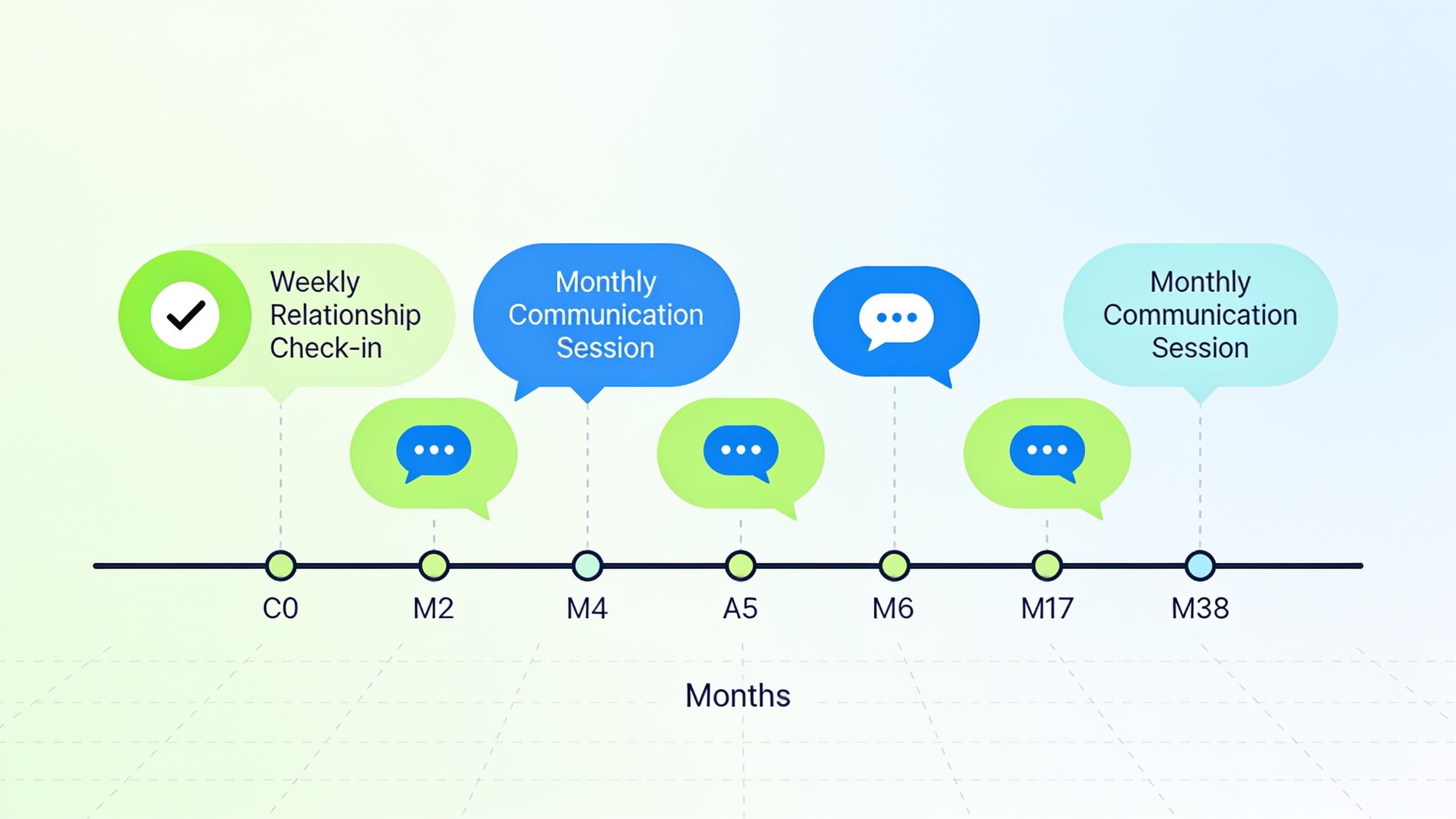
Feelings drift over weeks and months, even in something that started out purely physical. That's just how people work. So build in the occasional low-key check-in. A casual "hey, we still good with how this is going?" gives both of you an opening to say something before it snowballs into a Whole Thing. It doesn't have to be some big serious sit-down. A text after a few weeks does the job fine.
FWB Tips for Keeping Communication Honest
The single most useful piece of advice I can give you: say the uncomfortable thing out loud before it turns into a bigger problem. Most FWB arrangements don't die because someone caught feelings. They die because someone caught feelings and sat on it until it boiled over.
Vague hints get vague answers. "So... what are we doing here?" isn't going to get you anywhere useful. Be direct instead. Something like "I want to keep this casual and non-exclusive, does that work for you?" forces actual clarity, and clarity is the whole game here.
And communication doesn't need to be heavy every single time. A quick "still cool with our setup?" every now and then keeps things open without turning every interaction into a state-of-the-union address. The point is to make checking in feel normal, so that when you do need to bring up something real, it doesn't feel like a huge scary event out of nowhere.
Oh, and one more thing. Don't wait for a fight. If something's bugging you (maybe they brought a date to the bar you two always go to, or the texting's gotten way more frequent than feels casual), just bring it up. Letting frustration pile up almost always makes the eventual conversation way harder and way more loaded than it needed to be.
How Do You Keep Emotions From Getting Complicated?
You keep emotions from getting complicated by admitting early that feelings can and probably will change, checking in with yourself honestly, and being willing to renegotiate or walk away if the dynamic shifts. Pretending feelings never develop in an FWB thing is delusional. The goal was never to be a robot about it. It's to handle the emotions responsibly when they show up.
So watch for the warning signs in yourself. Getting jealous when your partner mentions dating someone else. Suddenly wanting to know about their life outside the bedroom. Feeling weirdly disappointed when plans are strictly physical and there's no dinner or hangout attached. None of these feelings are bad or wrong. But ignoring them tends to make the eventual reckoning a lot messier.
Here's a gut-check I like: ask yourself, "If this person told me tomorrow they were dating someone seriously, how would I actually feel?" If the honest answer is "devastated" and not "cool, good for them," that's real information. Act on it. Either have a conversation or step back before it gets worse.
And give each other room to be honest without it being embarrassing. A big reason people bury their real feelings in these setups is they're scared of looking foolish or getting rejected. If you both agree up front that either person can say "hey, I think I'm catching feelings" without it being treated like a failure or an accusation, that person's way more likely to actually speak up instead of quietly stewing until they explode.
What Boundaries Should You Set in an FWB Arrangement?
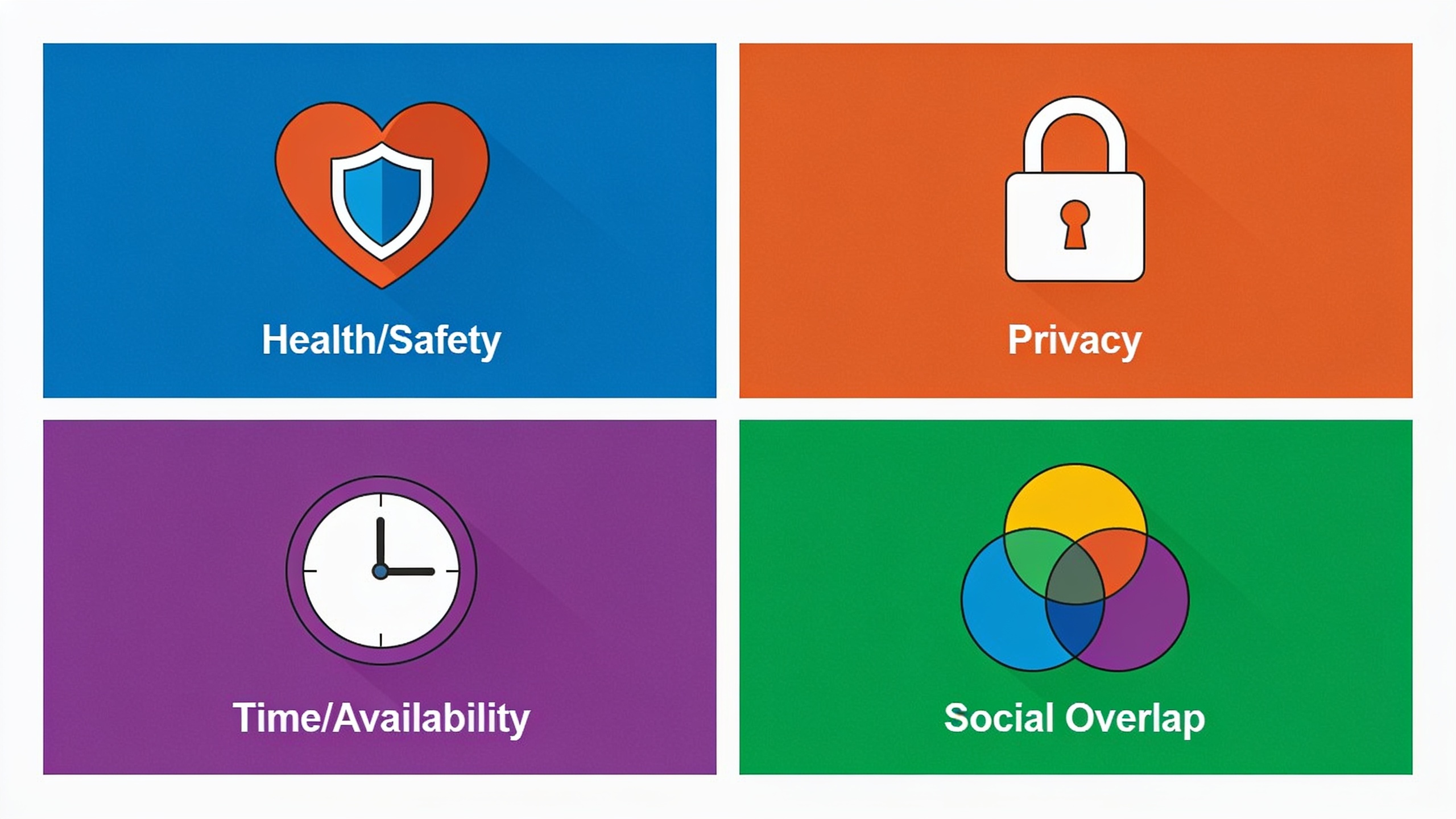
The boundaries that matter most usually land in four buckets: physical health and safety, privacy, time and availability, and social overlap. Get clear on each of these up front and you've headed off most of the conflicts that pop up later.
Let's start with the health stuff, because it's the one people love to avoid. Talk about STI testing, protection, and what happens if either of you is sleeping with other people. This isn't just some awkward box to check. It's a baseline act of respect for each other's bodies.
Privacy is the next one. Figure out together how much either of you is going to tell friends, family, or coworkers. Some people are totally chill about being open that they've got an FWB thing going. Others really want it kept quiet. Assuming your partner's fine with you broadcasting it to your entire group chat without checking first? Fast track to tension.
Then there's time and availability, which is quietly one of the most common friction points. Are you texting daily or only to make plans? Is this a "come over whenever" vibe or does it need a heads up? When two people have different assumptions about how available the other should be, it festers.
And finally, social overlap. Are you going to run into each other at group hangs? Show up at the same events? Introduce each other around? Some arrangements stay completely walled off from each person's wider social life, and some naturally start bleeding into it. Sort this out early so nobody gets blindsided.
| Boundary Area | Questions to Answer Together | Why It Matters |
|---|---|---|
| Health & Safety | Are we exclusive physically? What protection do we use? Are we getting tested? | Protects both people's physical well-being and trust |
| Privacy | Who knows about this arrangement? Are we discreet in public? | Prevents unwanted exposure or awkward social situations |
| Time & Availability | How often do we see each other? Is there a standing schedule? | Avoids mismatched expectations about effort or attention |
| Social Overlap | Do we hang out with mutual friends? Attend events together? | Keeps the arrangement from blending into a full relationship unintentionally |
| Emotional Check-Ins | How often do we talk about how this is going? | Catches shifting feelings before they cause a bigger conflict |
Do's and Don'ts: A Quick Reference Table
Once the initial talk is done and you're actually in it, a quick mental checklist helps you stay on track. Here's a stripped-down do's-and-don'ts version of everything above.
| Do | Don't |
|---|---|
| Have an honest conversation before getting physical | Assume you're both on the same page without asking |
| Check in periodically on how things are going | Wait until you're upset to bring up a concern |
| Respect agreed-upon boundaries around exclusivity | Sleep with other people if you agreed to be exclusive |
| Be upfront if your feelings start to shift | Hide growing feelings out of fear of "ruining" things |
| Practice safe sex and discuss testing | Skip the health conversation because it feels awkward |
| End things respectfully if it's not working | Ghost your FWB partner without any explanation |
Common FWB Mistakes That Cause Drama
The most common mistakes are skipping the first conversation, assuming exclusivity nobody agreed to, and letting unspoken feelings quietly rot instead of just saying something. Nearly every FWB horror story you'll ever hear traces back to one of those three.
The first one is jumping straight to physical without talking. Yeah, skipping the conversation feels less awkward in the moment. But it almost always blows up into mismatched expectations later. Two minutes of honesty up front saves you weeks of confusion. Not a great trade to skip.
The second is assuming instead of asking. So many people just decide their partner feels the same way they do about exclusivity or frequency or how emotionally involved this is, and they never actually confirm any of it. Assumptions are the number one engine of unnecessary hurt feelings in casual setups. Every single time.
Third is letting jealousy or attachment go unnamed. When that stuff creeps in and neither person says anything, it doesn't just vanish. It comes out sideways. Passive-aggressive little comments, sudden coldness, being irritable for no obvious reason. Naming the feeling, even when it's cringe to do, beats letting it slowly poison everything.
There's also this trap of treating "no strings" as "no feelings allowed." No strings attached describes the shape of the relationship, not some ban on being a human being. Pretending you're not allowed to feel anything at all just shoves those feelings underground where they do more damage anyway.
And then, ghosting. When one of these things has clearly run its course, vanishing without a word is one of the most common and most avoidable ways to leave someone bitter. A short, respectful "hey, I think this has run its course" message goes a really long way. Even in something totally casual. Especially, honestly.
How to Find the Right FWB Partner
Finding the right FWB partner starts with being upfront about what you want before anything physical happens, and it helps enormously to connect with someone who's already looking for the same casual thing you are. Where you meet people matters just as much as how you talk once you're together.
Flirtup is a casual dating platform built around exactly this: keeping things simple and low-pressure. You set up a profile (as a man, woman, couple, or transgender individual), say who you're looking for, and start chatting with real people nearby who are also into casual connections rather than the whole traditional-dating march. Because everybody signing up is already there with casual in mind, that dreaded "wait, what are we even doing" talk tends to go a lot smoother, since you're both starting from roughly the same place. If you'd rather find someone who's already on the same page than gamble that a match on some mainstream app happens to be open to casual, a platform built around that intention from the jump saves you a whole lot of back-and-forth.
Whatever route you use to meet someone, though, the rules don't change once you've connected. Talk early, set your boundaries, check in as things go.
When Is It Time to End Things?
It's time to end an FWB arrangement when one person's feelings, circumstances, or goals stop lining up with the original deal, and the healthiest way out is a direct, respectful conversation instead of just going quiet. The usual signs it's over: one person wants exclusivity while the other's happy staying casual, jealousy that just won't let up, a new partner walking into the picture, or plain old losing interest in the physical side.
And it really doesn't have to be dramatic. A quick "hey, I think I'm ready to move on from this, no hard feelings" is usually plenty. There was never a formal commitment to unwind, so there's no need for some drawn-out breakup saga. The same honesty that made the whole thing work is exactly what lets you close it out cleanly.
Frequently Asked Questions
Can a friends with benefits thing turn into a real relationship?
Yeah, it can. But it works best when both people actually acknowledge the shift out loud instead of just letting it drift there. If one person starts wanting more and the other's happy staying casual, that gap needs to get talked about directly, not assumed away.
Is it normal to catch feelings in an FWB setup?
Totally normal, and it doesn't mean you're doing it wrong. Physical intimacy tends to create emotional closeness whether you planned on it or not. What matters is being honest about it rather than pretending it's not happening.
How often should you check in with your FWB partner?
No hard rule here. But a low-pressure check-in every few weeks, or after anything noticeably changes, helps you catch shifting expectations before they become an actual conflict.
What's the biggest mistake people make in FWB arrangements?
Skipping the upfront talk about exclusivity, boundaries, and expectations, and just assuming both people want the same thing. That one gap is behind most FWB drama, full stop.
Do the rules need to be written down?
Nope, no contract required. But they do need to be said out loud and actually agreed on. If both people could restate the understanding in their own words, you're good.
At the end of it all, keeping an FWB thing drama-free really just comes down to treating the other person like an actual human with feelings and not a convenient body. Talk early, stay honest as things evolve, and be willing to end it respectfully when it stops working for either of you. The people who pull off casual dating best aren't the ones dodging every conversation. They're the ones who had a few honest, occasionally awkward talks up front so the rest of it could actually stay fun.
🔥 Looking for casual dating near you? 💕 Meet new people, chat, and make real connections today! 📍
👉 Tap the link to get started and see who's nearby! ❤️
Sponsored | Affiliate Link 🔗
